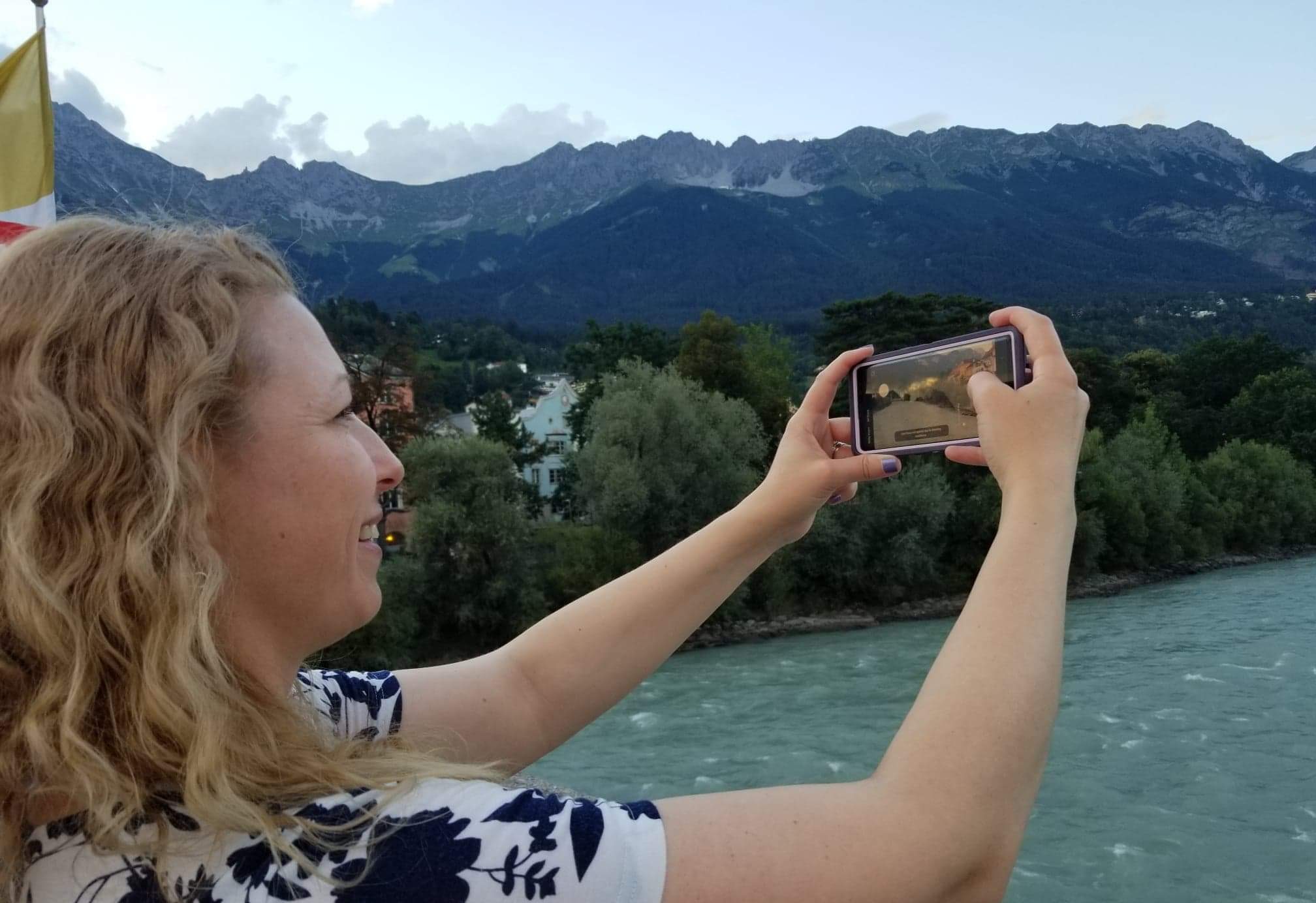
My Father. If there is an example to go along with what I have learned in the last forty-nine years about the complexity of humans, my Father is at the forefront.
As a child in Hungary, whether it was reflective of Hungarian culture or reflective of my Family, people were quickly summed up by a single word, then often ‘frozen’ there. Somebody may have been nice, chatty, frugal, funny, angry, or arrogant…nothing more, described simply as if one-dimensional. It may have served as a handy code in a politically complex environment in Communist Hungary, but imagine the human consequences of living in the habit of only seeing people as we can immediately assess them! It may seem I am exaggerating, but talking with my Mother over the years has always brought me back to this reminder: we grew up in Hungary with single-descriptors and that was one of the most psychologically claustrophobic experiences of my life.
For many people, their thoughts and their words tend to be congruent; in other words, they tend to choose words that readily represent what they wish to communicate. The very definitions of the words they choose to employ when speaking give insight to their own conceptualization of a person or event. Therefore, if the speaker hasn’t indicated they are unhappy with their word choice but the listener is left unsure about the verbal and nonverbal intent of the message, it’s best to seek out clarification of whether the speaker indeed meant to use the words they did. By this follow-up, the listener can introduce the possibility of a conceptual gap between the speaker and the listener, and the two can iterate toward a mutual understanding of the other’s perspective (but not necessarily toward an agreement). This analytical approach to communication, this mutual responsibility for an equitable conversation and fair representation of ourselves and other people, was simply not practiced by those who were part of my early childhood.
Growing up, I had a very difficult time separating my own feelings for my Father from my Mother’s sentiments of him. In the years I attempted to separate the two, to really understand my own feelings, I slowly learned my Mother had ultimately reduced my Father to a one-dimensional entity, one who was just all bad. Most importantly, she wanted me, too, to think so.
My Father was born in the back room of his Parents’ house in Hungary, as WWII ground war raged in 1941. As I wrote earlier about my Paternal Grandparents, my Father was my Grandmother’s second child and for the era, both of his Parents were considered quite aged. My Grandfather was age fifty-one when my Father was born. My Grandfather, too, had been born to an older Father, and he as well, therefore my Father always thought he could and should have been born decades earlier. I thought that was an odd thing to think about, let alone conclude, but my Father believed his life would have been significantly better had he been born to younger line of Fathers. Given Hungary’s history, I could see his point.
My Father was four years old when his Parents’ world was ripped out from around them. After 1945, Hungary installed Communist Officials and either executed or pushed to the fringes the previous government’s officials, like my Grandfather, who had been a Circuit Judge. Under Communism, for getting to keep his life, his properties were stripped from him, including his winery, and he was forced to work in a coal mine. This was the man my Father got to know as his Father, not the thriving, successful, and socially revered one who ceased to exist at age fifty-five in 1945, but a shell of him kept going. My Father also saw my Grandmother in her primary breadwinner role, thriving always to bring on more sewing work and tailoring students, while taking care of the full household. My Grandparents still did not have a typical small-town existence, because having been of means prior to Communism, they had wherewithal about the vast value of academic and musical education, so they prepared to send my Father to a bigger town to continue his studies and provided for his ability to focus on school and his instruments: the violin and the piano. To this day, at age 82, he still plays both beautifully. My Grandmother the Master Tailor, kept him in the sharpest suits anyone in Hungary could hope to buy.
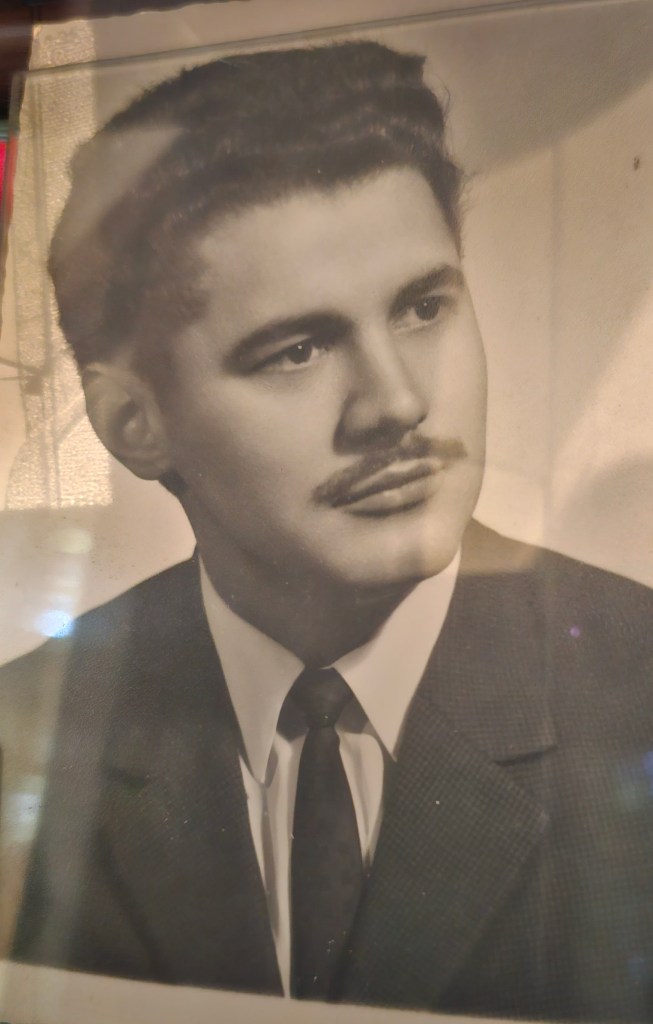
Where his psyche was as he began high school, I can only imagine. My Father did share he immediately realized the disadvantages his rural upbringing had afforded once he arrived in the city where he attended high school in residence. Jarring to my Father, he learned in his new environment that he spoke with an accent. Despite his Father’s (my Grandfather’s) education and pre-war financial and social status, the local dialect had rubbed off on my Father, and he was embarrassed by that. To him, it seemed the city kids also had significantly broader exposure to cultural activities, which made them more knowledgeable and more confident. My Father was uncomfortable about feeling like he was in catch-up mode…like his sphere of reference was smaller than that of his peers. My Father set out to change that by learning everything he could about the world at large and it’s that drive which may have pitted him against his significantly ailing Father who had no trust in Communist Hungary. My Grandfather feared how his only Child may receive the wrong attention from the Party for being too enamored with the advances of the Westen world. It may also have been that my Father was relying significantly on my Grandmother’s support to finance his studies and travel, but without gaining any sense of gratitude and even if temporarily, contentment.
My Father’s definition of what was an acceptable level of education, wealth and worldview ballooned with his achievements. He married before the age of twenty-three, and by twenty-four, he and his Wife of moderate means in Miskolc, Hungary, had a Son. My Father’s Wife came from a Family that had navigated Hungary’s Communist Party with less attention on them, able to keep their cumulative gains even in the post-war government. They were socially neutral, from my little exposure to my Father’s first Wife and at the risk of seemingly reaching for a one-dimensional description of her and her Family: they were nice. They were not actively in pursuit of something bigger, something more; they were probably the happiest ones in my Father’s life, actually.
My Father kept going to school, ultimately earning degrees in accounting and law, and with each accomplishment, believing he now deserved a life that resembled what he was personally accomplishing. The larger the environment to which he was introduced, the higher his expectations were for how he should be living and respected.
My Father was a sponge for knowledge, an avid reader who drew his self-worth from his studies, his discoveries of all of the cleverness and innovation in the world. Within a decade, he had seemingly overcome his more humble background, but never the pressure he put on himself to be seen as an educationally and culturally accomplished, charming, handsome, well-dressed man of means. He remained a ferocious reader and became very intrigued by all things aviation. He even tried to become a Pilot at some point but could not pass the physical as he told me, due to a suspected enlarged heart.
By the time the late 1960s arrived, my Father had grown to be an extremely handsome, charming, degreed, cultured, musical, well-traveled and well-dressed individual who began to see the social, intellectual and earnings limitations of his Wife and her Family, and deemed himself on a faster and higher life trajectory. Not only did he believe his marriage was now holding him back, with ongoing subsidy from my Grandmother’s hard work sewing, he felt my Brother was not seved well by being raised by them. 1967, the year my Grandfather passed, saw the deepest rift between my Father and his Father. My Grandfather deemed it my Father’s most massive shortcoming that my Father now wanted to divorce the Wife he had considered marriageable just a few years prior. In 1967, at the age of seventy-seven, my Grandfather could no longer provide some deterrent for my Father not to take more and more of my Grandmother’s earnings. My Grandmother was fifty-seven that year and ramping up her earnings, not slowing down. My Grandfather had good reason to worry; my Father appeared to have an insatiable need to be recognized for his studies, his intelligence, his status, and his charm.
I am aware of one missed love with whom my Father was desperately in love. The stories give this young Attorney great credit for seeing through my Father’s attractive and talented veneer to the depth of his insecurities, impatience, and volatility. She may have been the one who taught him how to hone what of himself he shows to the world.
By 1971, my twenty-nine year old Father met and married my Mother, then age nineteen, and began her transformation into the Wife he envisioned at the time. They were a strikingly beautiful couple.
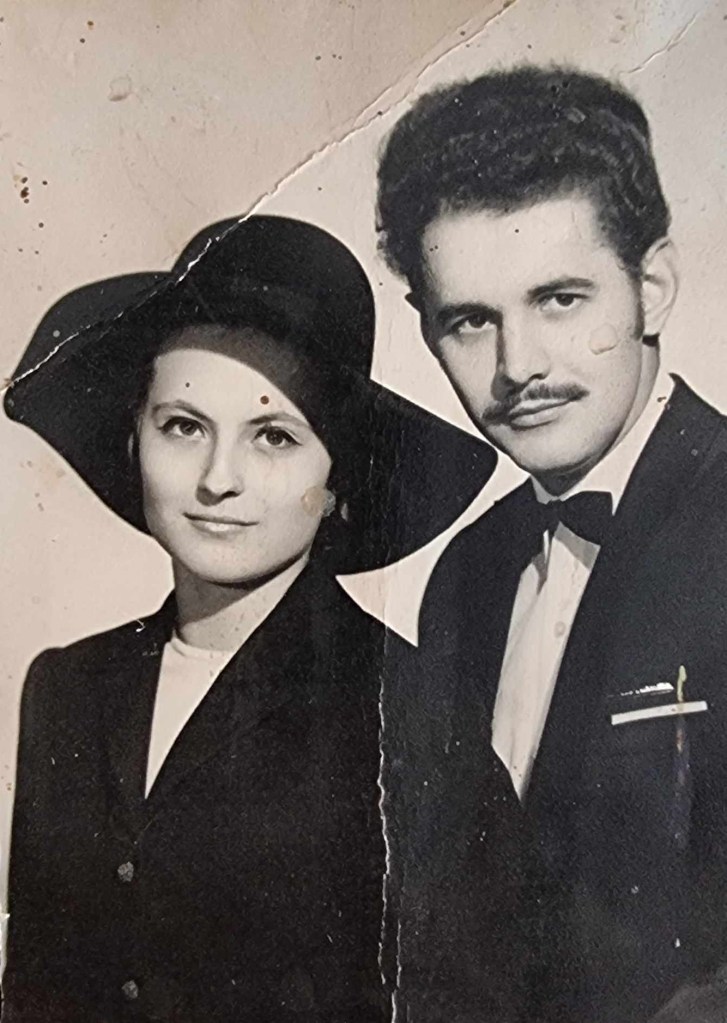
Marrying my Mother also facilitated my Father gaining custody of my older Brother, ripping him from his own Mother, and introducing more instability in his young psyche. It wouldn’t be for the last time, either. As a child, my Father didn’t fail to impress upon me how he felt his first Wife was simply not smart and ambitious enough and my Father felt she would spoil…ruin my Brother’s intellectual development. As an adult myself in 2006, I sought out my Father’s first Wife, as I had had nothing but kind interactions with her and her Mother, my Brother’s Grandmother. It was plain to see there were elements of reality to my Father’s fears, but had my driven Father and his empathetic furst Wife stayed together and infused both ambition and kindness, what a powerful combination in my Brother’s life that could have been.
My Mother and Father, despite their decade of age-difference, had key similarities, especially emotionally. They were both from Families crippled by Hungary’s communist government, both feeling the pressure to shed the social stigmas attached to those events but both carrying deep insecurities having the internalized narratives of their and their Families’ past ever-present within them. They both had a significant need to be recognized, admired, and validated by the people they deemed credentialed, popular and accomplished. My Mother started and finished college after she married my Father, she corrected her teeth and smile, learned to sew from the best (my Grandmother), and was always dressed beautifully, classically.
My Father didn’t quite have a growth-minded partner in my Mother in the sense that my Mother was content with their lives after the initial sprint; once she looked the part of their life in the mid-1970s, my Mother favored the company of her Sister who often wanted to benefit from my Parents’ standard of living, but would also readily making fun of it. My Father seemed to feel, he was having to keep pulling on my Mother to stay the course of education, planning for the future, and to minimize her Sister’s influence who kept making light of my Father’s ambitions and in a petty, underhanded kind of way, made fun of my Mother’s classical, not necessarily fashionable appearance. It’s important to remember my Grandmother, a Master Tailor, was subsidizing my Parents’ standard of living, and my Father was a decade older than my Mother and her twin. As the years went by and my Father’s educational achievements grew, the conceptual gap between my Father and Mother became a chasm.
I was born in 1974, and I was very young when I learned I had been my Mother’s sixth pregnancy (now this number is shockingly high, if you don’t understand how readily available and practiced abortion was in 1960s and 70s in Hugary; http://www.johnstonsarchive.net/policy/abortion/ab-hungary.html), and as my Mother told this story to me, it was my Father who made her have those abortions. I, apparently, survived after my Mother finally hid her last pregnancy cleverly, for several months. This is one of those moments in the memories in my head that I must take my recollections with a grain of salt. Nonetheless, I do know my Father already had a child who was living with my Parents, and who was eight years old by this time, my Father wasn’t particularly interested in children and he wanted my Mother to keep up her part as he was building his career. Precisely how many abortions my Mother had….did she want any of them, I do not know, as it was never my Father who spoke of this.
My Mother said my Father pretty much ignored me until I was about two years old and teachable. In my memories, just as far back as I can pull out bits and pieces, my Father was always trying to teach me something. I learned early his currency was intellectual performance. He was teaching math, the German language, chess, how to read a map, navigate public transit, and even basic accounting principles to me, before I began the first grade. After I was eight, he was teaching me about women’s suits, how to dress classically, shake hands, stand and make eye-contact in authoritative ways, and how to recognize manipulation and intimidation. That last one would become quite the lesson coming from him.
My Father was immensely handsome, and always very formal; through my age 14 in 1988, he had not yet owned a pair of jeans. He always presented himself as an easy-going, confident, hyper-intelligent individual whose education and accomplishments were to be recognized above all. Our home life was very far from this My Fair Lady‘s Professor Higgins representation in his mind however; I recall massive arguments between my Parents during which my Father would physically hit my Mother…eventually, in front of me, too.
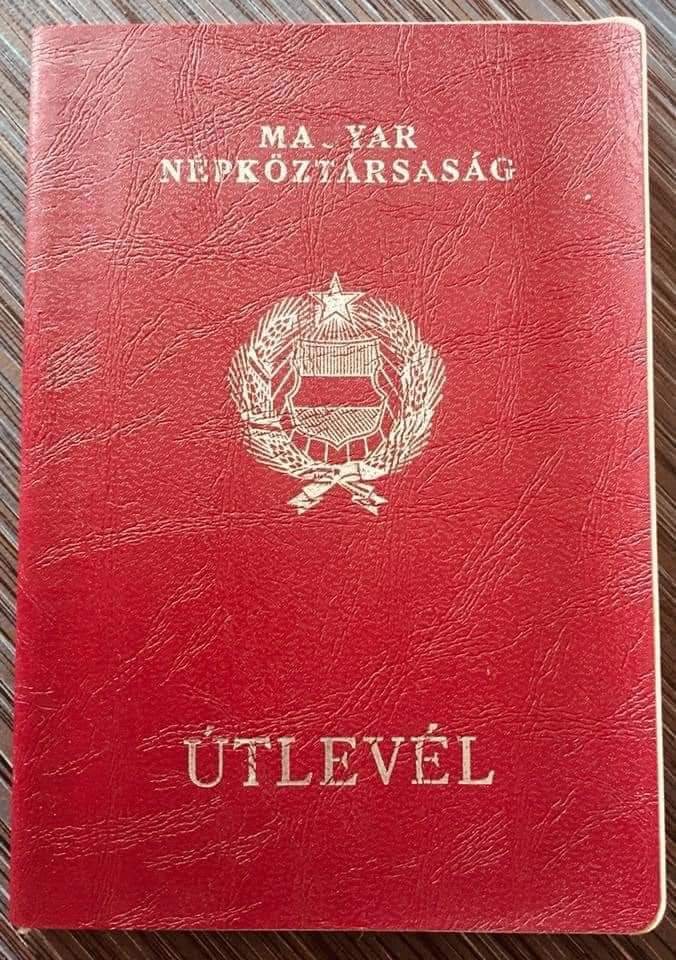
Source: Facebook Group Retró ABC minden ami retró
There were many reasons for conflict in my Parental nucleus and even more for lack of cohesion and alienation. By the time my Father earned his PhD and rebranded his first name from Xander to Dr (not legally, but in the way he preferred others refer to him), he was very frustrated with his position in the rack-and-stack of state-run government organizations. He continued his fixation on how much more money and status he would have had he accomplished his education in the United States vs in Communist Hungary. Presumably, as a present for accomplishing his Doctorate, my Grandmother bought their first car for my Parents, and helped them go on multiple trips across Europe. As his view of the world widened, so did his impatience and fury around how his efforts and talents were wasted in Hungary. He looked across to his Brother-in-law, my Mother’s very socially and financially successful Brother, and his disgust grew! How can he ever be recognized for the valuable professional he is, if who thrives now is who can cowtow to the Communist Government Officials (see the section on My Mother’s Siblings). It never occurred to my Father my Uncle also never made anyone feel stupid or lesser than. My Uncle built. My Uncle built individuals up, and therefore, he built coalitions and successful endeavors; my Father, on the other hand, was always seeking external affirmation, no matter at what cost to someone else. He woefully lacked any awareness of his own insecurities and impact. My Father also paid little attention to the other dynamics around him. For one, as his discontentment grew, my Mother’s Mother and Sister gained footing ridiculing him. This further drove a wedge between my Father and Mother, as my Mother was ill-equipped to push back on her lifelong dominant Sister, and was equally underpowered to stand up to my violent Father. My Mother was once again in a lose-lose situation, having to compromise no matter which status quo she was protecting. Then came the little matter of my Grandmother finding my Brother in the act of molesting me, in her house’s dirt-floor pantry. I was four and five. It had occurred at least twice, of which I have very clear memory. In those two I vividly recall, my Brother, nine years older than I, was interested in how my genitals looked, felt to his hand, where my clitoris was, and how it worked. He wasn’t forceful, he didn’t hurt me. I also recall having my Father, Mother and Grandmother staring at us, there in my Grandmother’s pantry, but I have no idea what happened thereafter. My Brother did not touch me after that day we were found. Years later, my Mother spoke of my molestation not in terms of how it may have impacted me, but to illustrate how my Father overreacted to so many unimportant things while under-reacting to what happened that day. I recall, as myself a Mother by then, thinking how cowardly she was, sitting there, regurgitating these memories so clinically, having once again excused herself from any responsibility.
In 1979, my Parents traveled all the way to New York City. They were so excited about their trip, half of which came from others’ envy they would be going to America.
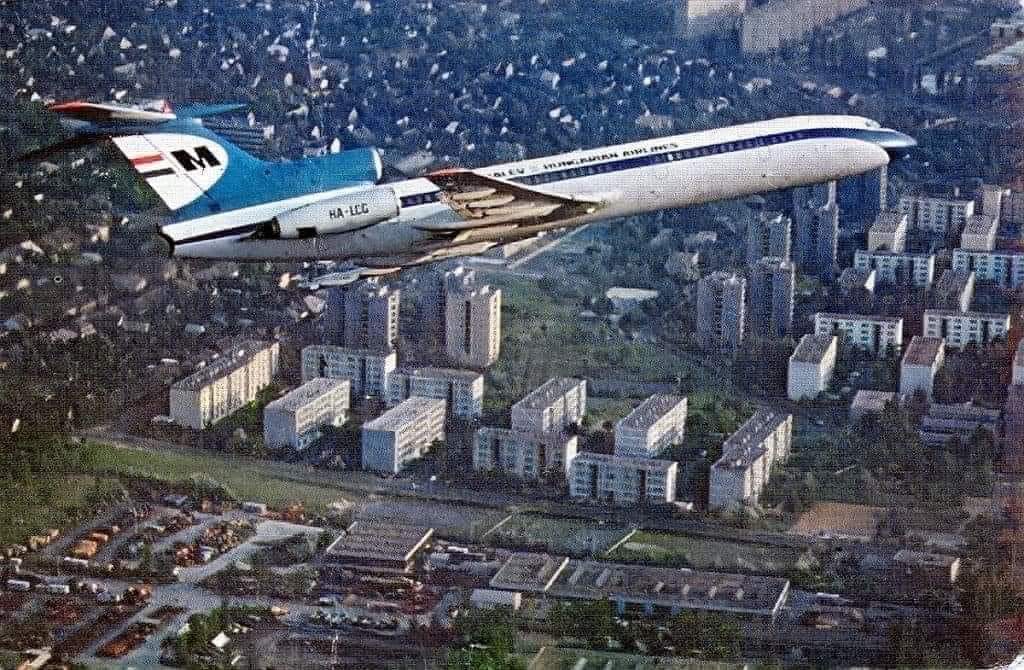
My Brother, age thirteen in 1979, took turns at our Grandmother’s house and at his Mother’s house while My Father and Mother were for an entire month in New York City. I spent time with my Grandmother when my Brother wasn’t there, and I also spent time in a small village North of my Grandmother’s, at the home or someone who had been one of my Grandmother’s tailoring students years prior, and who remained feeling indebted to her. Their life in that seemingly remote village was so different from my own, in a large industrial city. They kept farm animals, grew crops and the men operated heavy equipment. That wasn’t the only foreign experience for me staying with that Family however, as I observed their interactions, joys, challenges, hard work, and smiles. The fabric woven throughout their existence was one of full commitment, gratitude, and contentment. I sensed I was seeing a larger spectrum of existence as humans…a richness among them, a whole warm world, on their inside.
Rather than give my Father a balanced look at the expense and reality of living as an immigrant in New York City in 1979, his discontentment with his own life deepened. For the following three years, he set out to mobilize our Family from Communist Hungary to the West at all cost. While others were beaming with pride over Hungary’s progress in the Soviet fold, my Father grew more isolated and determined.
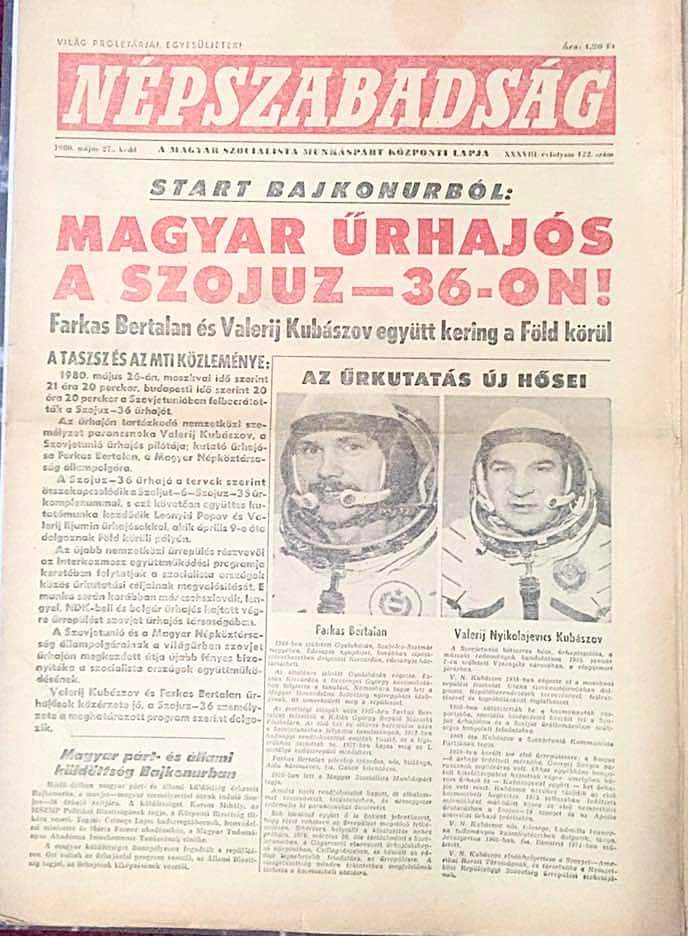
My Brother was sixteen in 1982 and had demonstrated he was not academically motivated, despite immense pressure, and beatings from my Father whose own business card now had four lines or credentials and certifications under his Dr name. My Mother, as another way to keep my ‘Monster’ Father in my memories and make herself the selfless victim, would speak of also being hit when he tried to pry away my Brother from my erupting Father. The fact that my Brother was still only seeing his own Mother and his younger Siblings periodically was not in anyone’s considerations. In fact, I may have been seeing more of my Brother’s Grandmother myself, as she had long worked at the ice rink to which I walked nightly, from around first grade. My Father realized the free but single-shot educational system Hungary had in Communism would only mean one thing: my “bad student” Brother would never finish high school, let alone be eligible to attend college.
On an earlier trip, my Father had seen the booming market in Vienna, Austria, serving the electronics hunger of all Eastern Bloc countries. There were hundreds of stores big and small along Mariahilfer Strasse specifically employing Hungarians, Romanians…representatives from all of the countries stretching East from Austria to Turkey, to draw in customers. My Father saw opportunity for my Brother to get started at the bottom and work his way up, and so explained his prospects to him, in Hungary, and in Austria.
In the Spring of 1982, with a 50-cubic centimeter Simpson motorcycle and a cushion of money he deposited in a Viennese bank for him, my Father deposited my sixteen year-old Brother in Austria, and told him he would be back in a month to check on him. I heard this story many times, as my Father would go on to say proudly, he was prepared for the possibility of finding my Brother starving and homeless at the end of the month, but my Brother looked well fed, was living in one of Vienna’s refugee shelters, was working and had a brand new leather jacket. His underpowered motorcycle had been stolen, but my Brother was moving about Vienna just fine. In my Father’s head, this was immense success. He knew my Brother was very smart, capable, handsome and an articulate conversationalist, and this path now seemed to save my Brother’s earning-prospects. It didn’t seem to alarm my Father my Brother was still only sixteen, and his shread of a support system in Hungary was now 420 kilometers (260 miles) away. It didn’t even matter that for now, while my Brother was still learning German, his job was merely to hand out to tourists exiting tour buses the fliers of electronics stores on Mariahilfer Strasse. My Father’s attention was on his next launch: my Mother and I were heading to New York City, to, like my Brother, seek political asylum. The theory was, our Family has significant, documented anti-communist history, and our chance of successfully defecting was high.
The night before my Mother and I were to board the KLM flight through Amsterdam to New York, my Father said a lot of very serious things to me, age almost eight, for which he held me responsible decades later. I actually hardly recall understanding where we were going, I absolutely did not understand the why, outside of the fact that when one in Hungary says she is going to America, her classmates turn pea green. This would be one of many great emotional misses between my Father and me, despite our earlier years of bonding by his teaching me and me taking it all in like a sponge. I am sure it would have been great to receive his desperate message of wishing me success, his all-in pride and paradoxically sacrificial stance, but I retained only that I missed something big and he’d hold it against me for, well, until he is at least eighty-two years old.
My Father miscalculated my Mother’s grit, conviction and commitment to his plans for she and I to stay in New York City. Despite having Hungarian relatives and friends nearby, my My Mother experienced a series of realities around trying to make a go of a new life in the US, therefore we returned from New York at the end of the thirty days, just as the Hungarian government had noted, upon allowing us out of the country. While the Hungarian government was satisfied, we may as well have delivered a machete back to my Father. His disappointment at this expensive, missed opportunity was gutting to him. I don’t believe he could ever see my Mother the same way.
Not long thereafter, in fact, there was hardly any time my Mother and I were back from New York City, when my Father learned my Brother was struggling with gaining refugee status with the Austrian government, because he was still technically a minor. If my Brother was deported, he would be back in Hungary facing the societal rack-and-stack there; a cringeworthy thought for my Father. I am not sure how this came about, but my Mother ended up joining my Brother in Austria post haste, which gave him a Parent and ultimately, they received refugee status together. For the next year or so, my Mother was living in Vienna, while I turned nine and my Father began to cut ties.
Why did my Mother go to Vienna in the first place? Why did she stay so long? What was her life like while there? I may not have a clear picture to answer all of these. I do know while my Father and I were living alone in the latter half of 1982 to Fall of 1983, my Father, now the Vice President of a massive, regional meat processing plant, filed for divorce from my Mother, and in absence of her, was awarded sole custody of me. I knew next to nothing from him; he didn’t usually engage in bad-mouthing my Mother. My Father rarely spent time talking about the people in our lives; my time with him was always academic or social/cultural. My Father systematically taught me about who a sustainably successful woman is, her habits, her choices, her learning mindset, the value of independent earnings for a woman, and the willingness to go it alone.
In the Fall of 1983 when my Mother arrived from Vienna, Austria to Miskolc, Hungary, she no longer returned to our flat. Soon, she had a Teacher’s apartment at the dorm of the technical school of which her Brother was the Principal. She had a job, and I was able to see her from time to time. This was an especially painful time for me. I was so confused by how little I felt my Mother’s attachment to me! I was the only one who seemed to be struggling by not getting to live with her, to see her regularly, I felt I hardly knew her now, over a year after we returned from New York. I would try to express my hurt around not getting to see her, but that would just yield her countering me with blaming my horrible Father. I know negotiations around custody and even financial reconciliation still went on in late 1983, but I kept unconvinced my Mother was using all of her resources, like her Brother, to gain back custody of me. There are these odd snippets in my mind from this era, ways in which my Mother kept me at arm’s length, even when with her for a few hours at a time….but this is my Father’s section.
1984 arrived, and my world further crumbled. Not only had the tower of my Family unit split in two, the two halves were now leaning away from one-another in such a way that I fell in-between them, and they were now forming new towers, even further away from me. Both my Father and my Mother were dating someone by Spring and Summer of 1984, and at age ten, I felt I was stuck in the hole that had previously been the base of my Parents’ original structure. I felt invisible and unimportant. Everything else was important. Politics, economics, and society’s lack of appreciation of him were the topics for my Father and even in the scarcity of time with her, fashion, gossip, and bashing my Father were my Mother’s focus of attention. She was now fully back in the sphere of her Sister, appearing to be youthful and fun, but actually, just coming across empty-headed. The one thing she was never available to hear was how I was. She never really inquired about what I was feeling, but she was sure to pump me for information about my Father. My Father was a notch better….he also didn’t ask how I was, but at least he left me alone about my Mother. It’s important to rewind back to the childhoods of both to remember how they had to endure much more life-threatening circumstances without the support of their Parents. They were now putting forth the support in accordance with the support they received: none. They had no tools, no models. This was undoubtedly neglect, but not a malicious one. Now sit with that for a moment; it’s hard to swallow. I’ve sat many years with it. …and sadly, my recognition of this generational lack of empathy didn’t automatically help me to be more present, more skilled myself.
My Father pursued finding a new Wife with great ambition, but that was not a bad time for us, as Father and Daughter. We traveled, ate well, had less intense lessons about politics, German or geography; while I missed my Mother, I did well with my Father in this window. Most every night, we would settle in for news or a show, after I had gotten home from ice skating and my Father made dinner for us. Since it was just the two of us, it was quite often that I would simply fall asleep right there in the room while watching TV. Recall this is a 595-sqft flat in a European culture where whether the living room with a Family’s single television set is now the Parents’ bedroom is determined solely by the time of day. In the many times I fell asleep in what had been my Parents’ bed, now my Father’s, not once did my Father touch me, look at me or relate to me in any way, but the healthiest of Parents with appropriate parent-child boundaries. He was a firey, self-absorbed, insecure, arrogant, brilliant and fragile individual, but he was no child molester. This will be important later.
My Father ultimately set his sights on a thirty-nine year old Dentist who had never been married, hardly dated, and the Daughter of a well-respected Physician. What she had in attractive metrics, she lacked in human savvy. She was also religious in an encumering way, overtaken by it like no one I had ever known. The Religious Dentist thought I was a bit too worldly at age almost ten, and was not impressed with my willingness to move about her small town and readily talk with boys my age. She thought I was raised unladylike, and I thought she was either fake or an expired Princess under some magical spell.
By September 1984, the Religious Dentist was newly married to my Father, a Stepmother to me, and pregnant. She knew my Father about six months at this time, who was forty-three with the experience of two marriages under his belt and two children. My Father would keep her on her heels for many years to come.
In November 1984, my Mother married her best Friend’s Brother, who despite living in California for twenty-some years, happened to be visiting in Miskolc, his hometown, for the Summer months. This courtship, too, converged quickly. The tit-for-tat was now complete….my Father married his Dr Wife and my Mother was on her way to America again, this time, with a convenient sponsor….and as it turned out, without me.
My Father moved his third Wife from the West side of Hungary to the Northeast, a massive adjustment for her, one of many. Prior to their marriage, she had still been living with her Mother in their large, beautiful childhood home from which her Father had practiced medicine, driving in the countryside and running a leisurely, private dental office. Instantly, my new Stepmother was saddled with a pregnancy at age thirty-nine, a domineering Mother-in-law, a tight-quarters flat in a downtown residential highrise in a large steeltown, mass transit and a job in a public Dental clinic. To make matters worse, she was also uncomfortable with her new Husband’s former Wife, my Mother, and managed to entangle her head already overloaded with changes, also with petty jealousy. It was excruciatingly uncomfortable, even if I understood maybe half of what was going on at the time. Their first year of marriage was hell for all involved. She had to have been so lonely. I may have had some warmth and love to give, but two things influenced how that actually materialized. First, my Mother unceremoniously informed me I was under no obligation to love or even like my new Stepmother; imagine the motivation behind saying something like that. It was destructive. It put ideas in my head, permissions, I didn’t need to have. It undermined any possible pleasantness, any potential bond. My Mother was about to move off my continent, but she made sure to lay a wedge between me and the caregivers with whom she’s leaving me. At the time, I didn’t even know how to verbalize what my Mother’s impact was, and certainly, there was no one to whom to say it anyway. Second, my Stepmother, likely in her overwhelm, seemed to have no warm regards for me. We lived as two utilitarian strangers held together by my Father, still flying high from finally being married to his social equal. He seemingly didn’t notice when my Mother left for California in February 1985, so no one said anything. Once again, the expectation was clear: just deal.
My Father’s third child was born in March 1985. Upon her birth, my Father scrambled to find a crib and other necessities, while his Wife was recovering in hospital, for the customary ten days or so. My Sister’s crib would move into the grownups’ room of our 595-sqft flat (yes, you read that correctly), the second room was to become a private dental office for my Stepmother, and I had a cot in the hallway/storage/patient waiting area. The kitchen was untouched by madness thankfully, but my daily grocery-shopping chore was soon upgraded to contain increasingly more time-consuming elements of Sister-tending.
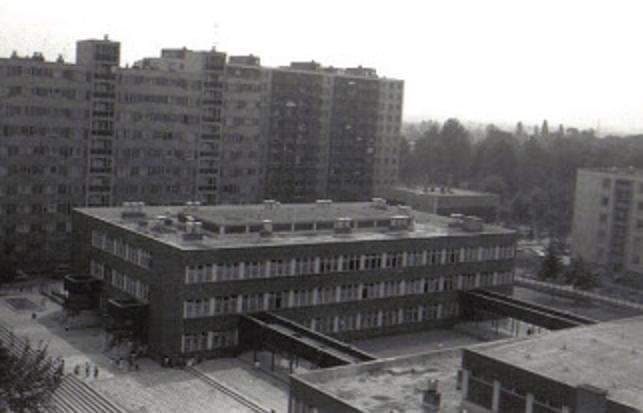
My invisibility was confirmed one day as I overhead my Father speak to someone about his new Family: “Well, we also have Vica here” my Father said, I’m in a tone that rendered me superfluous, an add-on, a complication. Whether he meant it that way, felt that way, I’ll never know. No one said confirming, nurturing things in my Family back then….least of all, my Mother. I would now get to speak with her from California about once a month for a few minutes on the phone. Those conversations were brutal for all. She would chatter on about the warmth, the beach, the pool, and I would feel like I was talking to an alien. My Stepmother and Father would witness the whole ridiculous exchange, my Stepmother sulking about my Mother of whom she was still jealous, and my Father maintaining plausible deniability about his jealousy my Mother escaped Communist Hungary. It seems my Father’s ballon burst very quickly after his third marriage. Unlike my Mother, my Stepmother neither bounced back from childbirth nor cared to tend to her appearance like my Mother, and that bugged my fantastically appearances-driven Father. This, in turn, fed her jealousy. Why she didn’t say “Screw you!” to my Father and return with her child to her home and life? Religion! I didn’t guess this; she actively professed this. She believed her mission was to save and convert my Father. Another strong data point for me. This woman was willing to twist herself into a pretzel in the name of being a committed, Godly Wife.
My Father’s third Wife was not of the independence and strength her Mother-in-law was, therefore her relationship with my Grandmother likewise suffered; effectively, my Stepmother was outnumbered and since she didn’t speak up for herself, was ultimately ridiculed at every turn. In the eyes of my Grandmother, her education and Dr credentials didn’t help her to be resilient nor particularly smart. I felt sorry for her, and I also felt very angry with her for being who I, too, had been raised to see as a weak woman. She certainly did nothing to endear herself on me; as she struggled within, she was as emotionally unavailable as my Father, my Mother, and so on.
Did my Father take advantage of this now forty-year old educated, old-money Religious Dentist? That’s a matter of perspective. As a Wife and Mother myself, I’d place equal responsibility with her Parents, who allowed her to be in a bubble, tragically unprepared for real life and ripe for exploitation of the most sophisticated type…by a good-looking, charming, educated man. What timing for my Father, too; he had just began dating the Religious Dentist when her Mother, her last of two surviving relatives, passed. There is a lot vulnerable about a person in the middle of a loss like that; whether the Mother was fond of my Father or not, her influence would now be open to be overridden.
My Father was neither understanding nor accommodating of my Stepmother’s immense life changes; even if he had some tools around practicing compassion, which he did not, he was too overwhelmed with his own ambitions and perpetual discontentment. Gratitude was not his strong suit, and one of his beliefs was that contentment was the enemy of progress; this was a serious mental hamstring. At the same time, he could drive into the countryside, enjoy nature, and even temporarily become serene. He could play the violin or piano, listen to music, watch endless musicals and other American classic movies, and feel perfectly relaxed. I loved this side of him the most, but would begin to see less and less of it.
As my Sister grew from infant to toddler, so did my responsibilities for her and my Father’s demands on his Wife to produce. She was now working at a public dental office (socialized medicine) during the day, and had private practice hours in our flat, multiple nights a week. After school, I would pick up my Sister from preschool and go grocery shop together for the day’s needs; food supply chain was very short in Hungary those days…no preservatives, and in a downtown highrise, refrigerators and storage were quite small. On at least one occasion, I recall, my Father and Stepmother left me alone at age twelve with my two-year old Sister for several days. Certainly, they left money, and I knew my way everywhere and had our neighbors to count on, but I still felt unseen in this situation. A sitting duck.
Our neighbors had been part of our external lives for as long as I could remember, nearing a decade. They, too, were interested in being self-sufficient and non-political, maybe even more so. Our flat was in the middle of three units on its floor. The two flanking units belonged to the same Family, the Parents and a child two-years my junior lived in one, and his Mother’s Parents lived in the other. They were vastly different from our Family, and I really liked them. I could tell they were immensely important to one-another, genuinely, not under conditions of good performance or status. My Family, my Father in particular, had put them in a very difficult position, over and over, with his behind-closed-doors but perfectly audible behavior, which was now the legacy with his third Wife, too. As for me, they always welcomed me with open arms. I was taught to see them differently from the onset however, which, while made no sense to me at the time, nonetheless undermined a true connection. Over my childhood years, I had spent very many hours with their Family, both the Grandparents and the Parents of my neighbor boy, but I remained an outsider in my head. They fed me, read stories to me, and made me feel like I was the reason their Son, a picky eater, ate at all. The Mom loaned me clothes for special occasions and did other things a Mom would do, while mine was on a fucking beach in California somewhere. My neighbors never, ever spoke poorly of my Family. Never. Had I had the capacity for true connection (had my Family fostered such), I would have done a better job reciprocating their well-meaning attention to me. As is, I serially related to them on a one-and-done basis, but which did not deter them from including me as per their nurturing values.
My Father sensed there was ample to respect about our neighbors, even in accordance with his biased measuring stick; he recognized how very capable both Parents were at their respective professions/businesses, and he may have personally admired how seemingly low stress they were, despite their tremendous challenges as Jewish people in Communist Hungary. This may have been the 1980s by now, but the Grandmother, who had been in the Allendorf Concentration Camp in Germany, was still having nightmares. She was also greatly disturbed by noise in the building hallway, which would remind her of the threat of intrusion and violence. The Grandmother eventually wrote a book about her Family she lost in the Concentration Camp, how she survived and her difficult decision to return to Hungary after Americans liberated Allendorf.
https://collections.ushmm.org/search/?q=Allendorf%20(Concentration%20camp)&search_field=Subject
As my Stepmother settled into our flat, she found very little flexibility in my Father’s routine and beliefs, and compared with her relationship with him, she saw his comfort and interaction with me, a shared history, something she deemed not altogether normal. Most detrimentally to me, she thought it was indecent my Father would change into his pajamas on one side of their room while we were all watching TV, and I, having participated in this evening routine a thousand times, paid him no mind at all. Despite my head never turning to look at my Father dressing, she felt it was odd and indecent. Upon learning I had been occasionally sleeping in that living room/bedroom bed prior to their marriage, my Stepmother decided she needed to look into the possibility of my Father having committed incest. Remember, she had already noted I was very comfortable around the stranger boys in her small town, so in her mind, perhaps I was not as innocent as my age would indicate. It is unclear to me whether my Father knew what my Stepmother did to satisfy her suspicions of his denied inappropriate behavior. Of course, no one talked about any of this with me before or after, but my Stepmother, at my age eleven, took me to a Gynecologist for a vaginal examination. It was remarkably painful. I wasn’t sure she would have gotten away with doing this had she not leveraged her medical credentials, because I recall the Gynecologist being very kind and very straightforward in front of me, informing my Stepmother not only was I a virgin, but there were no signs of anything but normal prepubescent development. He also added, as per his estimation, I was at least another year away from my first menses. Of course, I told no one; there was no one to whom to tell. It was such a bewildering, degrading experience I just wanted to push aside.
In 1986, my Mother gave birth to a new Daughter as well; I was eleven and a half at the time and now had two Sisters on two continents. Her arrival and their lives in California were like a movie I was told about but didn’t actually watch, let alone, live. When my Mother decided she may wish to return to Hungary for a while with her new Husband and Newborn in the summer of 1986, it only served to demonstrate to me how I belonged in neither place: not in my Father’s new life, and not in my Mother’s. At the end of the summer, my Mother and her Family departed Hungary, and it wasn’t as much of a shock to my system as her departure two years earlier. As for my Father, he acted like she hadn’t come and gone, there was no conversation, no pause, no questions of me, just the familiarity of his constant discontentment in his own world. His Wife was enduring very poorly what he was driving her to do, and he still felt daily his frustration with his own career progress, hampered by his enduring refusal to become a Communist Party Member. In these extremely challenging adult dynamics, I was merely supporting cast. As long as I kept up my responsibilities and required no attention, I would have moments of peace.
I began sixth grade the fall of 1986, and since my Mother departed Hungary without me once more, people in the neighborhood, at school and in general, felt empowered to speak up with their opinions of my Family. Certainly, we were a spectacle. More on this, when I write the next section, My Mother.
The next two years, I was less and less in the background of my Father’s woes and I moved to the forefront. As I got older, so did my own melancholy, and I began to create every opportunity to be absent from home, as possible. I skipped school, I got on the train and disappeared for the day in Budapest. I was entirely too comfortable with boys. I was ice-skating every night and failing key courses like math and Russian, which was setting me on the track of my Brother. Speaking of my Brother, he was a legal, productive Austrian resident and entrepreneur of sorts by now, and he would visit us from time to time. I was mostly torn about his visits, especially when my Father would press him for more and more showmanship (his car, his clothes); it was more drama than Family ties. In the summer of 1988, my Father was needing to occupy my time, so he sent me to live with my Brother in Vienna. I was thirteen turning fourteen, and he, twenty-three, living with multiple roommates. That was an entirely inappropriate summer for someone who was barely past her Eighth Grade Graduation. The visit nonetheless served as a catalyst; my Father saw it best to send me onto my Mother now, and by October of 1988, I was finally living with my mother. The last time we lived under one roof however, had been six years prior, so much more to come on that.
Over the next thirty-five years, I would see my Father a total of four times, with the last substantial visit in 1991. As I grew and aged in my life, I continually reanalyzed his impact on me, my Mother and others. I also began to understand the impact of his childhood, his Mother, on him. I did my best to apply what I as learning about empathy, compassion, healthy boundaries and decompression to truly understand how hamstrung my Father was, but I also had bouts of anger. I refused to communicate with my Father for many years at a time, once demanding he apologize to my Mother for subjecting her to years of physical abuse. At age eighty-two, now with a worldview quite sluggish in keeping pace and still unavailable to discuss the emotional side of our human experiences, it’s not likely he and I would ever have a conversation of substance. He has never met his American-born Grandchildren. He is now the primary caretaker of his Religious Dentist Wife, who, up until a few years ago, was still working hard to augment my Father’s earnings. My Father worked well into his seventies as well, but on legal cases and not in the demanding manner required of a Dentist. My Father also held onto his Parents’ pre-WWII house in rural Northeast Hungary well after my Grandmother’s passing, selling it only last year, along with the flat in which I lived with him until 1988. Both were an incredible time capsule.
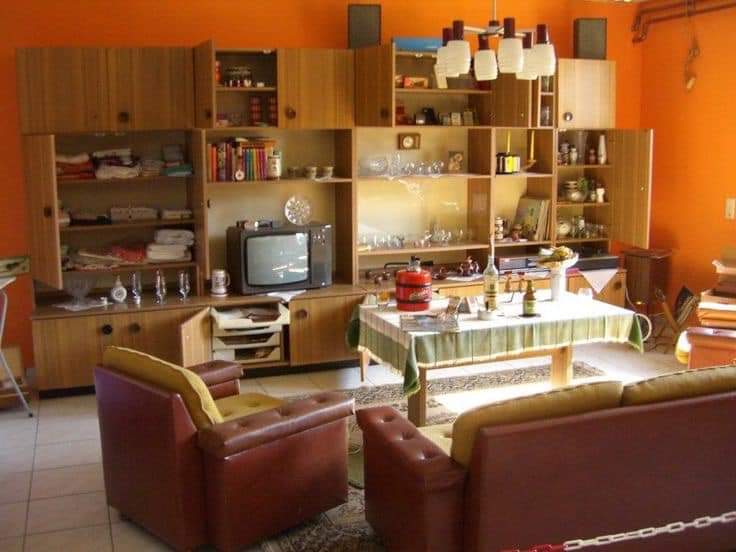
He and his third Wife had primarily been living in her Parents’ home in Western Hungary for the last twenty years, but my Father simply couldn’t let go of those properties, even though they drained them financially. He still plays the piano and the violin and has dreams of coming to the United States.
No single word could ever encapsulate the complexity of this man and the conundrum he represented throughout my life. I am grateful for the healthy things I learned from him, the drive he gave me for education and a career, but I was also steeped in his fears, his temper, and insecurities at the same time. I benefited from how he wanted to make sure I would be a resilient, capable woman, but I suffered from his underestimation of my need for empathy and belonging. He couldn’t give me what he didn’t have; and my best coping method was to keep my distance from him my entire adult life, short-changing us, both.


 One More Perspective
Leave a reply to Joy – One More Perspective Cancel reply