In the previous chapters, I described several key life events which I believe shaped my Mother, her Parents, Siblings, as well as her beliefs and decisions; therefore, I will be building on those earlier chapters as I now turn focus on my Mother.
My Mother was born into a modest Family in Miskolc, Hungary, in 1952, alongside her twin Sister, as a surprise to her Parents, who were anticipating one Sibling for their six year old Son. My Mother likely experienced her first years of life completely as a function of her twin, who was the more naturally communicative and adventurous one. My Mother’s personality had elements of my Grandfather’s gentleness, but also the insecurities of my Grandmother, both of which made her especially suited to be her Sister’s ready follower. Her Sister recruited my Mother for all kinds of mischief; nothing outside the norm of energetic, creative kids, but relentless in pursuit, regardless of punishment. By the time I heard these stories, from my Mother and Grandparents, it was understood between them all that my Mother was generally the compliant, repentant one, with my Aunt as the brainchild behind whatever trouble upon which the pair embarked. Their punishment ranged from spanking (predominantly slapping on the face), kneeling in the corner, to performing extra chores and grounding, with my Grandmother as the disciplinarian my Aunt worked hard to defy.
Her Father was my Mother’s favorite, as he would advocate for her, reminding my Grandmother my Mother was the more docile, compliant one. The way my Grandfather tempered my Grandmother persisted throughout my Mother’s childhood, with the exception of the six years my Grandfather spent in prison in the Soviet Union and Hungary, missing crucial years of balancing out the Parental dynamic between my Grandparents. During those six years that began when my Mother was four, my Mother was without the buffer my Grandfather represented, and those were also the most stressful in all of their lives. My Grandmother, who was naturally unsettled, impatient, and harsh prior to the 1956 Hungarian anti-communist revolution, after her Husband’s imprisonment, became desperate as well. The Family’s survival was now up to her and her earnings, while she carried on raising three children on the fringes of the Hungarian society, which had been freshly beaten in line to ensure their public support of Communism and the Soviet Union. Whatever my Grandmother was feeling was immediately magnified and transposed onto her three children, of which my Mother ingested the highest concentration. My Mother had lost her buffer, her Father, and was now left without any consideration and warmth during what were years of struggle for survival and a search for acceptance and belonging. One can only imagine how lonely my Mother felt, especially among two exuberant personalities, her Mother and her Sister, both of whom dealt with their stressors in external ways. They likely routinely overwhelmed my Mother, who was further stressed by their expressed emotions on top of hers. This may have been when my Mother adopted a coping mechanism to help her endure her emotionally loud environment; I suspect she dealt with the overflow of stimulus by shutting down. It’s a very natural human reaction, a survival mechanism, to shut out overwhelming demand, to deflect and seek shelter. I think my Mother however, may have frozen in this way of relating to the world and to herself, in this era of her childhood, living as an impoverished social outcast with the world all too loud and demanding, perpetually searching for refuge. By the time my Grandfather was released from prison, my Mother’s defaults had been set. The dynamic of my Grandparent’s marriage also changed, as my Grandfather was now working through a backlog of my Grandmother’s anger and resentment she had piled up over six years of his absence, with compounding interest.
My Mother graduated from High School and began working in a bank; she was beautiful and perfectly conditioned to take a back seat to a big personality. Speaking of….she and her Sister both dated and true to their personalities, took different routes to compliance with their curfew. My Mother said she would always be sure to arrive home five minutes before the curfew my Grandmother had set and would watch as her Sister walzed in late, knowing full and well it would beget a reaction and a consequence from their Mother. My Uncle was married and had moved on by this time, and my Grandfather was always in perfect agreement with my Grandmother; well, he was mostly silent, deferring most matters to her. Why did my Aunt continue to seek out a power-struggle with my Grandmother? I have my theories, and they mostly stem from my experiences of them later in their lives; both were very much always ready to start and entertain an energetic conflict, and I’m guessing, the flood of hormones that came along with those.
My Mother may have met my Father in the bank where she worked; he was an Accountant by then. Interestingly, I don’t know this detail, where and how they met. It wasn’t long before the two were eloping however, much to the heartbreak of the person who was also trying to marry my Mother I was told. She was nineteen, and her Sister was already married. Therefore, the bar had been set. I recall asking my Mother very many years ago what the difference was between the two men; why did she chose my Father? Her reasons are very understandable in the context of what her life had taught her up to that point; she chose the more economically viable man. Sure, he was handsome and charming, but he felt familiar to her for another reason she would not understand, not even at age seventy. He possessed an anti-communist Family history and insecurities very much like hers and he came with a lot of conflict-seeking energy, just like her Mother and twin Sister.
Her new, married life at age nineteen immediately set her on a course of high demands. She became Stepmother to my Father’s five-year old Son, a very smart, but already heavy-hearted boy who was missing his child-centric Mother and Grandmother. Instead of having the love and attention of people who were aching for him, he was now chafing between two emotionally overwhelmed people who regarded him well, but also had steep expectations for him without offering understanding and support. Had they truly had his best interest in mind, he would have been living with his Mother.
Outwardly, my Mother and Father looked the part of a beautiful couple, full of potential, energy and Family support. The reality within was a stark contrast, with both feeling immense pressure to impress, to be socially revered, and looking to the other to provide what they needed out of the marriage. My Father put the expectation on my Mother to go to college, but she also had to work, partially because of her contribution to the Family finances, but also because in a Communist Government, all adults were expected to be employed, unless they had specific, pre-approved reasons not to be in work status. Part-time college student status was not one of those exceptions. In turn, the government provided subsidized food, healthcare, extensive maternity benefits, and retirement. My Mother was looking for social acceptance, and status as that Wife of someone everyone would readily see was a catch. That made her a catch. The more he accomplished, the more she rose, and the more he expected of her, while neither recognized the internal needs and drivers of the other.
My Mother got more and more polished (and straight teeth) as the next few years went by, and thanks to her Mother-in-law’s support, they were also traveling in Europe, both East and West, much to the envy of my Mother’s Twin. There were major strings attached however, as the demands on my still just early twenties Mother were great. She had been looking for a social construct which elevated her position and soothed her insecurities about having grown up as the outcast Daughter of an imprisoned anti-communist revolutioner, but she had traded that for having to play the role of a very specific supporting figure in a life predominantly designed for my Father’s ambitions and little else. Worse, there was a competing female character much more capable of playing that selfless role showing my Mother up all the time: her Mother-in-law. My Mother went from the shadows of one kind of overwhelming personality to another. This one not churning up drama by nosying into other people’s business and having too many unqualified opinions like my Mother’s Mother, my Father’s Mother introduced a much more psychologically debilitating influence. My Mother approached my Grandmother from a position of insecurity and overwhelm. No doubt, despite her extensive work with young women to whom she was teaching the tools of the trade to become a Master Tailor, my Grandmother cut her Daughter-in-law no slack. One can only imagine how intimidating that relationship had to be, and rather than being open to the new knowledge, my Mother felt defensive, recoiled and thus perpetuated my Grandmother’s perception of her, as not resilient. How unfortunate. With an ounce of compassion, my Grandmother could have been an incredible resource and support to my Mother, but it wasn’t to be.
I don’t know much about the ready-availability of birth-control products in Hungary in the early 1970s, but I did find published data on Hungary’s wide employment of abortion from that time to help give context to my Mother having multiple abortions in those first years of her marriage.
By early 1974 however, at age twenty-two, she felt ready to proceed with a pregnancy, even while the three-ring circus persisted around her and within her. She was working, contributing to the raising of my Brother age eight, and still attending college part time, since she had not been on a university path prior to graduating from high-school. She had a high-strung Husband who came with a widowed Mother of his own, a loving Father whose voice was crowded-out by her Mother and Sister. ….and none of these individuals, save her subdued Father, was genuinely on her side. I have often wondered how much of her elusive happiness she pinned on her pregnancy, a baby who would unconditionally love and need her, exactly as she was. She loved babies then, and she loves them now. After all, babies are wonderful, needy, easy-to-please, non-opinionated creatures who bring their own love into the world and lend societal legitimacy to a woman.
Her pregnancy wasn’t easy, and no one went out of their way to support her, least of all, my Father. Her Sister was pregnant much of the same time, with her second child. She frequently mentioned two events she recalled from that time: a woman in their highrise apartment complex had jumped to her death, shocking the community of neighbors. My Mother had not before encountered a woman’s suicide and was very shaken by it. I wonder what concepts it introduced within her, what doors in her mind it opened; she never offered her analysis. Actually, in all of my years as her Daughter, I have not experienced her as the reflective kind. While she may recall an event, she would not share if she had thought at length about the event, what it may mean to her, or its impact. The best she would do is slap it with a single-word descriptor, and move onto the next topic.
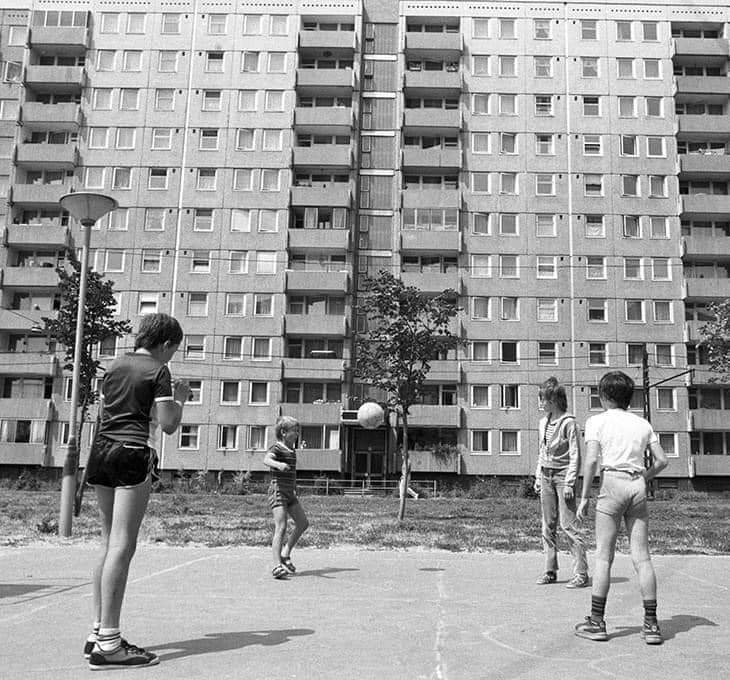
The second notable event during her pregnancy was an accident she endured at around month seven. While walking from the bus stop across the field between two highrise apartment buildings on her way home from work, a stray soccer-ball hit her directly in her pregnant belly. She was immediately frightened, and as she recalled, for an entire week, she wasn’t sure if I was alive. I simply cannot imagine that stress, having carried two pregnancies to term. I also cannot imagine why she didn’t seek medical help, and if she did, why she wasn’t reassured. That late in her pregnancy, a simple stethoscope would have picked up my heartbeat. Of course, we didn’t actually have a conversation about this; my questions have always made my Mother instantly defensive, as far back as I could remember.
My birth proved to be very painful, protracted, and scary for my Mother. She said she was in labor for 32 hours with me; at the time, while babies were born in maternity hospitals in Hungary, epidurals were not the norm. My Mother, at 5′ 2″ and normally 100 pounds, was experiencing me progressing very slowly. I can only imagine the lack of support, the lack of reassurance, and her loneliness in those critical, vulnerable hours. In the end, she had to endure the additional pain and destruction of the forceps required to bring an end to her traumatic birthing experience. It would be ten years before she would consider another pregnancy, as she told this story.
While it was my Grandfather who drove us home from the hospital in his baby blue Trabant, it isn’t clear to me anyone from her Family was of actual assistance, which may have been due to the strenuous nature of the relationships my Mother was ill-prepared to navigate. Everyone around her was readily critical of everyone else, and she had no skills to set boundaries about requiring each party to not speak ill of the other. Had she had the wherewithal to enforce respectful or at minimum, neutral dialogue around her, it may have gone a long way in introducing order and calm in her world, but instead, she was just caught up in the spew of the person in front of her at any given time. Worse, she had defaults that, when stress-activated, would work to minimize conflict by agreeing to the words of whoever was talking, continually keeping her flapping like a rag-doll. Not having the constitution to push back on her Mother, her Sister or my Father, she appeared on each of their sides, while how she really felt and what she needed she subordinated to each person, in her mind, in the name of keeping peace. What she didn’t see was how this very “keeping peace” actively contributed to the madness, and she was, unconsciously, but readily fueling it. She was far from the victim, but that’s an unpopular perspective, I know. My entire life, this has been my struggle: to temper my judgements of my Mother while enduring the impacts of her defaults.
I, her sweet baby, would have been so fulfilling, but as life would have it, I was born with some health issues that needed tending. Even her first impression of me were unsettling to my Mother; to her, she says just for a moment, but I looked like her Mother. This may have been just for a moment, but it burned onto her memory. The forceps damaged my left eye, specifically the muscle controlling my eyeball, therefore I needed corrective therapy to strengthen it. I had a hip tightness issue, which meant I needed corrective splints; a massive burned on top of my Mother’s Family, household, work, and college responsibilities. The stimulus overload she didn’t predict kept ratcheting up, and the tiny refuge she expected to find in having me was not materializing. Not even my chronic ear-infections were a sign to my Father to ease up, step in, get over yourself. My Mother struggled on, all the while “keeping the peace” among the hungry egos she called Family. The day I had double middle-ear surgery was a day of finals for my Mother, for example, and I cannot imagine the angst that was daily building within her, with nowhere to go, no release. While she had some Friends away from her Twin, I am not confident she ever allowed herself to be transparent, as getting an empathetic ear was at the cost of her facade crumbling. She seemed to get more acknowledgement and social recognition from keeping up the charade, the Wife of an up-and-coming Accountant-turned-Attorney with two children, beautiful clothes and appearance, international trips, intellectual social class, far from the crumbling rental her Mother could afford on the edge of town living hand-to-mouth, waiting for her Father to be released from prison.
As I rounded the corner on a couple of birthdays, I began to get my Father’s attention; it helped that his Mother seemed to like me, she cooked especially for me and remember that chamber-pot she’d quietly set out and make disappear just for me? Yes. I was getting the approval and care of the two most difficult people from whom to earn approval, my Father and his Mother. My Father was teaching me everything he could fit into a day’s interaction, whether age and developmentally appropriate or not. I was not only soaking it all in, he expressly found I was very smart and teachable, both very high on his value scale. He also found ways for me to get direct exposure to social situations and facilitated my independence in every way possible. It the same time, this made me a weirdo of sorts, as I was having a hard time fitting in with my peers at the state-run preschool intended for children through their third Birthday and beyond, if not yet toilet-trained. I was barely two, long-ago potty-trained, and I was immensely bored.
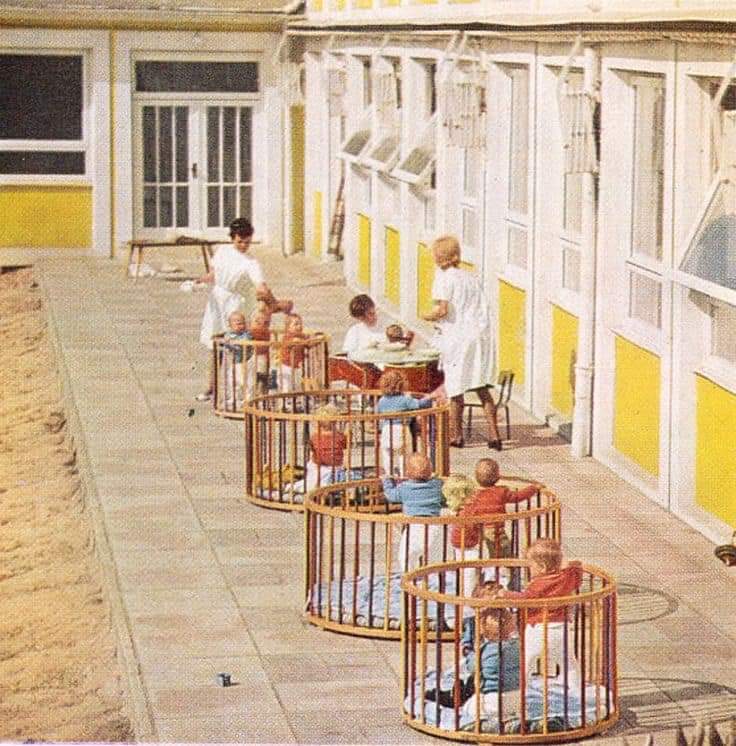
My Parents arranged for me to be permitted to enroll at the next state-run school, designed for three to five year-olds. Early childhood development was a very regimented institution in Communism, after all, it served the purpose of ensuring standardized, subject-controlled curriculum, and because it was free and readily available, was also the tool to get women back into the workforce, to keep the labor-focused engine of Communism in motion.
This move from my first preschool to the bigger kids’ school also coincided with our move from a highrise apartment in the foothills of the Avas mountain in Miskolc directly to a newly-constructed, modern (of the 1970s) highrise flat my Parents could pay the Hungarian government to own. This was a very big deal.
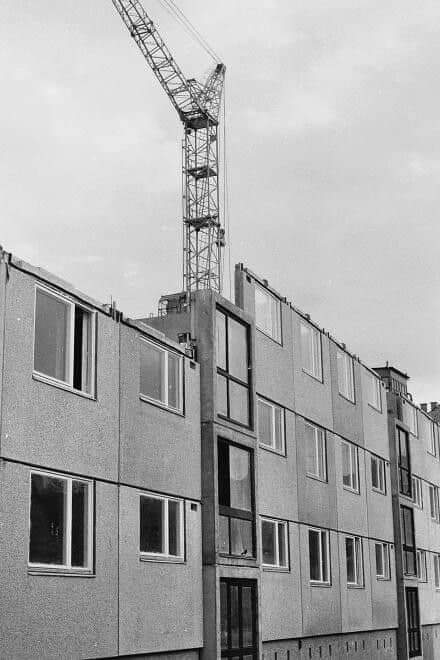
My Parents considered themselves very important for being able to land a brand new, state-sponsored flat in a rent-to-own arrangement, minutes from downtown, shopping, and all modes of mass transit. Hungary through the 1990s was driven by mass transit. Few people owned their own vehicles, and culturally, there was little need. The norm simply was mass transit. This meant Hungary was still in the pre-automobile construct of city and village layout, with most commerce and people concentrated around downtowns. It wasn’t until the last fifteen years Hungary began to have enough vehicles and shift its views, favoring the suburbs as now a spacious, environmentally and human friendly alternative to its convenient downtowns. How ironic, since this is also the same time period during which Americans got tired of the commuting hassles of suburbia and the liabilities of bigger homes, and increasingly re-embraced the downtown-centric living again, valuing walkability and mass transit. COVID-19 had a temporary impact on this migration out of the suburbs, but I don’t believe a permanent one.
By 1976, I was apparently a much happier camper with the older kids in my new school in our new neighborhood, and my cognitive development was faster than ever. I showed great interest in all things that facilitated my independence and new learning. At age three, I was proud to be solely responsible for a couple of grocery items; I was to make sure we ended up buying those, at regular intervals. In reality, I think my job was just to pester my Mother about the ingredients my Father needed for his daily tea, but it still made me feel important. I was learning German words, geography, to count money and to read numbers, navigate road-signs and recognize labels in the store. I also didn’t mind being quizzed by my Father in front of strangers; he loved showing off his Daughter’s intellect and ease with speaking in front of and to adults. I once even sang to a large conference audience on the heels of a Father-Daugher quiz show. Apparently, I felt fully empowered in front of crowds big and small, as I was also helping my Mother sell cosmetics on the side; an under-the-table entrepreneurial effort her Sister roped her into.
While these activities and how I was at ease with them energized and involved my Father, my relationship with my Mother was tearing. I think maybe she had expected I would be timidly by her side for many years to come, and she didn’t anticipate when my Father finally acknowledged me, it would be in a swooping sponsorship, gaining his approval and affection like she could not. If my theory that my Mother, at the age of twenty-two, was envisioning a baby to adore her has any elements of truth, whom she birthed instead, was the opposite. As far back as I can remember, I was ready to explore, ready to set out alone and questioning everything that didn’t make sense to me. I was a child for whom my Mother was not ready….and would never be ready. The tragedy here is that my Mother is a very bright, capable, good-hearted person, but by never developing her own approval from within, she remained wholly dependent on other’s approval, in many cases, warping her relationships. By not realizing and stepping into her self-worth, she didn’t create and enforce boundaries around what was acceptable behavior and how to delineate herself from others. She also carried from her childhood the pattern of going passive to accommodate others in a demanding moment, but thereafter silently stewing until she figured out a below-radar way to wriggle out of the commitment to which she had wanted to say “No!” She was especially sensitive to and yearning for the approval of women, which was a recurring theme throughout her life, but I’m getting ahead of myself.
Between the ages of four and eight, my relationship with my Mother was in constant deterioration. I am not aware how she felt upon witnessing my Brother molesting me at the age of four, but I do recall she deferred all reaction, whatever that was, to my Father. She was also there when her Brother-in-law took naked photos of me, some with his Daughter in them as well, with my Mother’s Twin also a part of these activities. My Mother almost always took me with her when she visited her Parents and her Sister and Family, but once we were there, all interactions were superficial as far as I was concerned, and while I loved my Grandfather above all and enjoyed my similar-age Cousin’s company, I would overall never feel like we had a solid, committed Family. Upon returning home, undoubtedly, there would be a condescending conversation between my Mother and Father, and sometimes those erupted into arguments, especially if my Mother had committed to something with or for her Sister my Father didn’t wish to spend time or money on. Some of those arguments would escalate such that my Father would begin to beat my Mother. The sounds were devastating to me, and obvious to my Brother and our neighbors, who went years taking a very discreet posture about what they were hearing. My Father’s temper was escalating over those years marching toward 1982; the more diminished he felt professionally in the Communist Government’s construct, the more volatile he became. My Brother and I weren’t spared either, especially as our grades deteriorated approaching the magical eighth grade, by which a Hungarian student was either performing in accordance with the scores of a pre-college track, or was funneled toward a vocational school. From the perspective of the Hungarian Communist Government, since all schooling, universities included, were free to students, only the best and brightest, determined by the eighth grade, would be permitted acceptance. Never mind the complex developmental factors of individual growth; this was all about financing only those who had proven early they could academically perform.
At home, moment by moment, I would deploy a sensitive mood-meter and continually monitor my Parents’ tone, especially my Father’s. I was like an internet crawler, but I was listening for signs of any brewing situation. I found neutrality a comforting thing, as I had learned to be cautious around too much levity; it was the fastest way to disaster. Little things set off conflict, surface things, the things that jeopardized what my Parents were projecting outward. Big things, like how everyone was actually doing, were never discussed. It’s hard to imagine, but never. Not even my Mother’s degree in pedagogy and her start of an elementary school teaching job impacted how she related to me emotionally. She had ample feedback about my school days, as I was going to school with her, to her school. She knew my teachers and saw me at recess and other times throughout the day. Still, our relationship persisted as transactional, and I could always feel her overwhelm. She had ample pressures, the heaviest of which were the facades of a happy marriage and a thriving life. There were also the ways I irritated her, nothing out of the ordinary, and her discipline of me, a slap on my face, was not out of the norm for Hungary at that time. She wasn’t excessive nor relentless, but when I would verbalize at a later time she had slapped me, she would categorically and angrily deny it. This, now I know the word for it: gaslighting, was also part of our relationship, and her denial of my realities at this age would only be the tip of the mammoth iceberg for what was to come.
My Mother joined more side-gigs her Twin Sister invented, one of those I recall as if it was yesterday. The two of them took up sewing bikinis for the upcoming summer, made from shimmery materials and the favorite, bright colors of the 1980s: pinup lipstick red, sunshine yellow, kelly green and black.
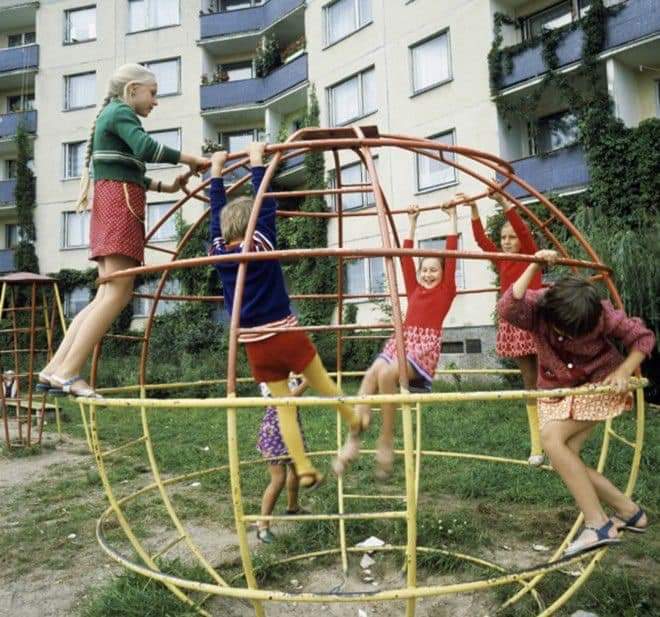
I spent countless hours playing with my Cousin while our Mothers sewed, and she and I eventually got bikinis of our own; mine was red. I wore that bikini with pride, I must have stretched it across three summers. I loved its shiny red color, I loved the little buttons and beads my Mother had also sewn on there just for me, I believed; I had the prettiest one of them all. Then one day, I could not find my red bikini. I asked my Mother about and she said she hadn’t seen it and moved on. I did not move on however, I kept looking for it for what seemed like months, and feeling really unhappy about the bathing suit I now had to wear. It wasn’t red. It was barely shiny. It had no beads. I must-have brought up the missing red bikini a thousand times to my Mother. Another season went by, and one day she sent me into one of her drawers to fetch something for her…you’ve guessed it. There was my red bikini in its beautiful shininess, balled up but fully accessible to my Mother, whose drawer this was. Remember, this was a 595-sqft flat, no cubic inch was wasted or disused. My heart sank. I thought of how much I had been looking for this bathing suit, wondering what I had done to misplace it. I immediately asked my Mother about it. She was dismissive of my implication she had known all along where it was and factually replied I had outgrown it. I then dared to ask why she didn’t just tell me this a long time ago, and there flashed her anger and disgust with me; I was after all, at age seven or so, questioning her, and that was unacceptable. She said something to the effect she didn’t want my reaction, and fair or not, I felt like she was such a coward. I cannot begin to describe what a hatchet this was on our already tethered bond. Over the many years, I thought about this, especially after I became a Mother as well. My Mother had so many options for how to handle my childish attachment to a piece of clothing shrinking with each passing year of my growth or the other annoying things I did, but ultimately, she neither addressed it nor helped me cope with what should have been basic, recurring childhood conversations. This is where I have to remind myself over and over: my Mother had not been afforded any more regard nor transparency herself, especially during her most formidable and intense years, when her Father was gone.
I have no insight to how much preparation or practice my Mother had prior to executing our escape to New York City in 1982, but I know it was an intense time. She was thirty years old, my Father was forty, my Brother sixteen, and I was seven. My Brother was already in Vienna by the time my Mother and I flew to New York, so my Father returned to our Family flat in Miskolc, resumed his daily activities and tended to his Mother. Acting as if his Wife and two Children would be back soon was critical to the plan from his end, as it was known under Communism Family members who stayed behind could be held liable for assisting those who had defected.
I am not entirely convinced my Maternal Grandmother’s Cousin in Elmer, NJ, who was initially supposed to fetch us from JFK had been entirely onboard with our arrival, because he went home when our flight didn’t arrive on time. Thankfully, he returned to get us eventually, but it was severely awkward, and it set the tone for my Mother’s impressions. This Cousin was in his sixties, a bit older than my Grandmother, married and with a Son and his Family living nearby. Over the next few days, we spent time acclimating but were also significantly out of our element, as if we were simply too much for our hosts. My Mother and I didn’t speak English, but they spoke Hungarian, with the exception of the Son’s American Wife. I vaguely recall discussions thereafter that our visit had come to a premature end after an evening of where my Mother had made this American Wife jealous and furious. I had ample time to think about this as an adult and attributed the possibility this was true, to cultural differences, her lack of Hungarian knowledge, and my Mother’s charming routine deployed at the wrong time. Needless to say, we were ushered onto Queens, where my Mother had a former colleague who had emigrated to the US from Hungary a few years prior.
Arriving in Queens was exciting, and I felt more at ease than in the small community of Elmer, NJ, which reminded me more of a village than a city. My Mother’s Friend was very nice, and immediately began showing us the ropes; teaching us language basics, how to grocery shop, buy bus tickets, navigate the city. She took us to the top of the Empire State Building and other famous landmarks, all the while explaining how things worked for immigrants to get started. Given their college degrees wouldn’t be recognized, her Friend explained the types of jobs available to them and the standard of living that afforded…right there, in the residential highrises and vast concrete of Queens. I cannot imagine my Mother had expected the work she had put in to climb the social and economical ladder in Hungary would now be traded for the struggle of a brand new immigrant without a work permit, trying to establish a living essentially illegally. In addition to the overwhelming realities of staying in New York, she had full-time exposure to me; something else that wasn’t going particularly well. I was accustomed to a certain level of moving around our city independently and eating (eating a lot), therefore I represented an extra layer of demand on my Mother, on top of the demands on her to establish a job and a residence as quickly as possible. For context, I should mention: it was my Father who made the majority of our breakfasts and packed our lunches; he was in the kitchen in full swing by the time I woke up each morning and my Mother was still getting herself ready. My Father also prepared a lot of dinners, handled the household bills and most aspects of their financial life.
As the thirty days, the official duration of our visit to the United States, came to an end, my Mother must have felt serious conflict about staying in New York or returning to Hungary. I suspect I added a great deal to her reasons to conclude she couldn’t make a go of it alone with me, so we returned to Hungary, despite her likely anticipation my Father would be deeply disappointed and concerned for our future in Communist Hungary.
My Mother must have felt very disappointed she had felt she had to return to Hungary, and whether she was trying to ease the fallout with my Father or some other reason, she decided to be the one to go to Austria to help my Brother obtain refugee status. This left my Father and me home alone, the Father who could be brilliant and fun, but also volatile and violent. Still, as an adult, I am actually very happy for my Mother when I recall this era, as I believe her nearly one year in Vienna was the only time she had opportunity to experience what its like to be a young person. She had freedom away from the demands of others, and she had camaraderie among those Hungarians seeking refugee status and those already in a legal status in Austria, employing them and teaching them the ropes. She was only thirteen years older than my Brother, so now that he was sixteen then seventeen and fully autonomous, they were more like Friends than Parent-Child. They had the shared emotions of my Father’s impact, good and bad, and they had new lives, even if for my Mother, temporarily.
The story as I have it is this freedom my always-beautiful, young Mother was experiencing was getting translated back to Hungary in nefarious ways. I care very little about whether there was any truth to the rumors of her entertaining the advances of men not her Husband, the bottom line was she was finally living. Now, this is the adult me writing this decades from this occurrence, not her eight-nine year old Daughter stuck back in Hungary in real time. ….and while we are on the subject of what all my Mother was up to in Vienna aside from helping my minor Brother obtain refugee status, the adult me also thinks it was non of anyone else’s business, but people like to talk, they like to exaggerate, and they like to shame women for enjoying themselves, clothed or unclothed.
I am not fully clear on the order of the next few events, but I know my Father was severely disappointed my Mother had wasted their resources and chance to emigrate from Hungary to the United States, something my Father had dreamt about with increasing desperation, rumors about my Mother’s time in Vienna surfaced, my Father filed for and received a divorce from my Mother and in her absence, got custody of me. Most impactfully, even after my Mother returned to Miskoc, Hungary in 1983, I would not again live with her until the fall of 1988; in total, that was six years of my childhood.
Upon her return from Austria back to Hungary, now divorced, my Mother seemed to like her tiny, Teacher’s apartment in the dorm highrise of the school her Brother was running; I would visit her on certain Saturdays, maybe other days, but I do not recall ever spending the night there. I have one odd memory about her time there and one devastating one. The odd memory was about my Mother sending me to the grocery store for some items; it didn’t happen always, but when it did, I thought it was a shitty way to spend the precious little time I had with my Mother. I was nine years old, but probably not the typical nine-year old.

I had autonomy like few of my peers, alone bouncing around between the locations of my siloed Family members, using Miskolc’s extensive mass transit system. I had long ago learned how to navigate it; I memorized every bus and tram line and knew how the railways worked. My Father had bought me a monthly all-access pass every month since I was six; back then, I was riding public transportation to get to my elementary school, the one at which my Mother had worked, about five miles from our home. Transportation-fluency was a huge thing for my Father to teach my Brother and me; he admired it in all its forms and considered it part of basic intelligence to know how to navigate any mass transit system, in any part of the world.
In this Fall 1983 to Spring 1984 era when my Parents’ divorce was fresh, hurt was taking shape in many forms. My Mother claimed my Father wouldn’t let me see her and my Mother was constantly preoccupied with everything it seemed, but me. She said my Father, as an Attorney, was too much part of the County Court System and therefore in a more powerful position when it came to my custody. She asserted she had no recourse, but I had a difficult time believing that because she never seemed upset about me not living with her. If she was, I had no idea. My impression was only I was struggling. Only my heart was breaking. As I was needing to leave her Teacher’s apartment in the student dorms building after one of my very brief morning visits with her in the Spring of 1984, I was having an especially difficult time doing so. I was nine and weary from the second year of living without my Mother. I remember that instance of having to leave her side, walk alone to the bus stop, put my ‘all is well’ face on, board the city bus (there was no such thing as school busses in Hungary), and go to afternoon school. In elementary schools in Miskolc, the day was split such that younger classes and older classes (through eighth grade) traded weeks of morning and afternoon class times. On this particular day, I needed to get to the afternoon school start time. I was simply not up for it, but I knew I would be in trouble if I didn’t. What I needed was to at least see I wasn’t the only one in distress. If I saw my Mother also devastated, then I would know she loves me. Through my pleadings and tears, I watched her as if through a microscope, desperate to detect her emotions, to get a shread of evidence she, too, was struggling with our visit concluding, but I didn’t get the glimmer of reassurance I was seeking. I was the only one shattering in that moment. My Mother was beginning to show signs of the normal exasperation she would when I became too much, when I was emotionally overwhelming for her. I remember every single lonely, heavy step to the bus stop, an agony erupting from deep within me that was so engulfing emotionally, it felt physical. …but by the time I boarded the bus, a merciful numbness was relieving me from those emotions, as if a circuit board had shorted out. I was reset, ready once again to play the part my Parents cast me to perform. As an adult, I don’t actually believe my Mother didn’t love me. I think she has always loved me the best she could, the best her own ambient insecurities and overwhelm allowed. That’s actually my point with this writing…to show the complexity of humans, their very, very many different facets. That day, my hurt had no loving-support, just like my Mother as a little girl had no compassionate loving care when she most desperately needed it in her Father’s absence. Likewise, my Daughter endured untended hurts for which I was not present in the way she needed me. This is my ultimate failure, my ultimate heartache. …one which cost me my brilliant, creative, beautiful, funny, amazing Daughter. I impacted my two Sons as well, but it was their Sister who had the most overt reaction to the deficient way I supported them in their most difficult, adolescent years. I am very proud of her for not silently enduring my shortcomings, but I’m once more disheartened by my Mother, particularly the role she played in my Daughter’s interpretation of me….but I am getting ahead of myself, again.
I still pinned my hopes on my Mother for the anchor in my sense of Family as the Spring of 1984 turned to Summer, and it became clear my Father would soon remarry. It didn’t bother me he would have a new Wife, but when later in the Summer I met the man my Mother was now living with, my heart sank. He was fine of an individual so far as I could tell, but he was nonetheless inching me further from ever having my Mother and a sense of Family belonging. Once I learned this man would also be taking my Mother to California, I could feel myself falling into a ravine. She was very happy though; if she was torn at all about going to America (because of leaving me behind or other worries), I wasn’t aware. We didn’t have those types of conversations, and I was pretty accustomed to her expectations of my conduct: just go along.
Two weddings occurred back-to-back, and by February 1985, I was getting ready to say goodbye to my Mother. As far as I was concerned, she was moving to the moon. I remember our last two meetings before she departed for the US all too well. I was a pretty unhappy student by this time, the fifth grade, and I was suffering greatly from social stigma associated with having Parents who were not in the Communist Party, and having Parents who were among the first to be divorced. See, I had been going to school with these same thirty kids since the third grade, and I would be for three more. Now, my Mother was leaving me for the second time, and rather than people rallying around me, I was a pariah. I am confident my poor coping mechanism was part of my overall vibe, and at this point, I was also becoming aware that while I was among the best fed, most cultured, most traveled and most individually mobile person in my class, I was among the least well dressed and least actually tended-to. In my Family, I was surrounded by probably at least theoretically well-meaning but overwhelmed, leaky cups. I needed a shield to face what was coming. I needed a distraction at school, and I picked a particular shirt as just the ticket! It was a velvet zip-tutleneck split-collar, long sleeve shirt in a deep wine color; I became fixated on getting it to have for the first day I had to go to school after my Mother had flown to Los Angeles. I knew my Father would never entertain a clothing request from me (the attention at home was going to the worry around my first new Sister about to be born), I didn’t even try. Given how much focus my Mother had always put on her clothes, especially with her Sister perpetually scheming about how to buy the latest fashion, I asked her for it. In hindsight, I bet the kind neighbor lady probably would have let me borrow something similar, like she did many times thereafter.

I am quite sure looking back as an adult myself, my Mother was under significant strain as she was spending her last few days prior to her departure, and she also soaked up the approvals she was getting from her Friends….after all, California and a new Husband! By all accounts, my Mother had hit the jackpot of routes out of Communist Hungary. In the United States, her Husband had been a 1956 refugee from Hungary, the same anti-communist uprising which resulted in my Grandfather’s imprisonment in the Soviet Union and therefore, in Hungary, so they had a lot in common and no language barrier. My Mother also thought her new Mother-in-law was heaven compared to her first one. I met her; I could absolutely see her point. My Mother had married and was about to join her new Husband who also had four children of his own! Since he was eighteen years my Mother’s senior, his oldest children were only a decade or so younger than my Mother, and at least two still living with him. She was facing incredible changes, let alone the events of the earlier three years! Needless to say, my request for the shirt she did not get around to accomplishing before we met for the final time. This was problematic for me because I had been laying the groundwork for the grand distraction at school, talking up this incredible blouse, my armor. I was ready to execute. I was now facing a day of school with everyone knowing my Mother had left. Again. Why did my classmates know such intimate things? For one, I had been the only kid with no Mother at the stupid, mandatory Mother’s Day class celebration the year prior, and because the Teachers gossiped too much, and I had two classmates with Teachers at that school. Wholly stressful.
So here I sit in a heap at my Grandparents’ house, having to face at age ten and a half I don’t know when I’ll see my Mother again, contemplating the certain disaster of my own making by having confidence I could get that shirt, thinking about how much I don’t want to face my classmates the next day or at another ridiculous Mother’s Day event, when my Grandfather asks “What’s wrong?” Before I can move the lumps in my throat and pickup my head to focus my eyes on his loving face, my Mother chimes in: “She’s mad at me because I didn’t buy her some shirt!” I am not sure my heart could sink any lower, so I think it may have shriveled instead. How could she possibly cherry-pick THAT part of the overwhelming distress I was trying to survive?! Did she really think it was about a shirt? I felt thoroughly dismissed, but then, I was not truly surprised. This had become a pattern.
February 1985 turned to March and there was a lot going on for everyone. From her own accounts, I know when my Mother arrived to her new Husband’s home in Los Angeles, California, she found his three adult children were in various stages of still depending on him, there was one elementary-age child living there who had belonged to his deceased former Wife, and money was going out the door faster than it was coming in. Her new Husband, fifteen years her Senior, had children aged just ten years younger than her, and the dynamic was not in her favor. She took the next several months to reel in that situation, especially the financial piece, and to get to know her surroundings. Between February 1985 and May 1986, I would talk with her on the telephone every few weeks for a few minutes, and she would send postcards of California palm trees and beaches and pictures of herself by the pool or some other iconic spot in the obnoxious sunshine. I especially felt like an alien looking at my Mother’s pictures when the winter arrived in Hungary, and I was quite cold. I didn’t have a great winter coat, but then she sent one to me. Its zipper was broken. I liked it nonetheless, and my Grandmother sewed in a new zipper for me.
I was chafing between a high-tension home, a newborn, and school, classmates and neighbors, some of whom thought it acceptable to tell me they didn’t approve of my Mother leaving me the way she did. Surely, nothing makes an eleven-year old girl feel more invisible than that. I struggled with basic things like clothing and laundry, hair and other things a Mother tends to be involved in….by now, I was responsible for handwashing my own clothing, a diminishing quantity at that, since between the three-ring circuses of their lives, no one was actually buying me any (save the winter coat from California), all the while I was hitting puberty. We didn’t use a washer and dryers hadn’t arrived into Hungary from the West. My Father took all of his clothes and our Family towels and linens to the cleaners every week.

It was the lady next door I had known my entire life who would kindly walk a fine line to help me at special occasions. She would open her entire closet to me and let me try on a dozen things to pick the clothes I liked best for a school dance or another pesky ol’ school Mother’s Day celebration we both knew I had to endure alone. I say she walked a fine line, as she had to be sure not to offend my Father, of course, by gifting or lending me nice clothing. She knew all too well how proud he was, and I would likely have been in trouble for entertaining such help. The fine detail to understand here is that we were very far from poor! We ate like kings and traveled like no one else I knew, but necessities like clothing and other supplies, including school supplies, were simply not at the forefront of anyone’s mind, nor accounting.
Soon, my Mother was pregnant in California and very happy about it. She was very pleased her Husband loved children and was in full support of her pregnancy, despite his age at the time, just under the age of fifty. My Mother gave birth in a Catholic Hospital, my Sister in Los Angeles was born eleven months after my Sister in Hungary, in February 1986. I am unsure what all the factors were, but in May of 1986, my Mother, her Husband and the elementary-age child living with them came to Hungary and stayed for three months. On one hand, I was thrilled to see My Mother and her new Family, on the other, I felt like I had no spot. My Mother’s Sister was as active as ever in my Mother’s ear, and my Mother’s attention was far more divided than the natural needs of a newborn. She was in major distress. I later learned some of the potential reasons; her Husband’s financial situation was significantly worse than she had assumed, she needed another pregnancy termination, and they were contemplating their next move. I have no idea what role in her calculations I had, if any, but once the summer was over, they departed Hungary and arrived in Destin, Florida, to settle there, next. They chose that destination as my Mother’s Husband had a Friend there who owned and operated a restaurant in the next town over, and he would be a source of immediate employment. I would see them again, in a year.
My seventh grade in Hungary was an increasingly lonely one, save my best Friend with whom I ice-skated most every night of the year. I had my daily chores at home, grocery shopping and tending to my Sister, and I often wondered what my Mother and my Sister were doing. Our phone calls were no more numerous nor of substance than previously, but she did send me more clothes and on about three occasions, shoes, too. The shoes I found more lucrative selling for cash, then I would skip school, hop on a tram, a train and the subway, and spend a glorious day alone in Budapest. I didn’t do much, I would sit in a very busy, beautiful square with a huge statue and steps, reading and sometimes eating from the Gerbeaud Confectionery, a bakery, or street vendor nearby. Those were my most peaceful, content days. I would reverse my mass-transit route and return to Miskolc, with no one the wiser. I did this with increasing frequency into the eighth grade, but first, the summer of 1987.
Since my eighth birthday, I had spent with my Mother snippets of days scattered across nearly five years, with my emotions seemingly frozen in time, but in reality, simmering deep within. In the summer of 1987, I would spend three months with her for the first time in a very, very long time, and in her new world, in Destin, Florida. I flew alone from Budapest to Atlanta, and my Mother and her new Family picked me up from there. It was very exciting seeing where they lived; despite the old townhouse they were renting, I thought it was nice and compared to our 595-sqft flat in Miskolc, quite large, too! My Mother, a green card holder, found employment with a local church nursery that was far from her teaching job in Hungary, but in light of speaking limited English and in possession of a college degree the US did not recognize, it worked out quite well for her and provided for her own childcare needs. She also babysat in the neighborhood, cleaned a few houses and by all accounts was working very hard to, alongside her Husband’s audio-visual job at a nearby conference center, make modest ends meet. The summer went quickly and largely uneventfully. We went to the beach just enough for me to be tired of it, but then, as my visit was winding down, I was surprised to find we would be actually celebrating my birthday! That was a first (and last) with my Mother, and the second such event in my life; my first birthday celebration was when my Father’s soon-to-be third Wife hosted one for me, at age ten. I think what happened was my Mother was still newly navigating US culture and her place in it. She had not anticipated by mentioning my birthday to neighbors, they would have an expectation she would be making a fuss over it, but as such, I think she was on the hook. It was nice. I knew she was out of her element throwing a birthday party for me, and likewise, so was I. In following years, she was more guarded about creating expectations around birthdays, and other Family events with greater meaning for Americans. That same summer and thereafter really, my Mother was careful to hardly ever leave my Sister in my care. She’d say it was because she didn’t want me to have to care for yet another Sister, like in Hungary, but as an adult, I wonder if she was concerned I’d not take good care of my Sister or worse, relate to her poorly, however that would manifest itself. I was fine with that. We had eleven years between us and very little relevance in each other’s lives. My Mother also fostered none. She handled us as distinct entities, but one thing was certain: my Mother felt a sort of attachment to my Sister, she did not feel toward me, and I wasn’t thinking of the obvious, age-dependent elements. I was reflecting back to my memories of living with my Mother prior to my age eight. She was actually very actively nurturing to my Sister, constantly holding her and otherwise pouring herself into her, as she should. Finally, my Mother had gotten the being who was all hers, completely dependent on her, and showing no signs of growing to be counter to her. If anything, my Sister at eighteen months (and thereafter) was the most adorable, cuddly, calm and content toddler, easily allowing my Mother to be very productive in her days while also taking care of my Sister. My Sister was, by most accounts, a very low demand child, with the exception of her poor ears. Like me, she had perpetual ear infections, but unlike me, a structural, middle ear surgery for the fix wasn’t the protocol in the US, so my Sister consumed infinite quantities of antibiotics, was given ear tubes, but thankfully, ultimately outgrew the condition. At the end of summer in 1987, I returned to Hungary, and my Mother continued charting their lives in Destin, Florida, working in childcare, learning English, and raising her second Stepson. Her Husband had secured a job by this time at a nearby resort working in their conferencing department as an audio-visual guy, but it seemed to me it was my Mother who was constantly seeking more hours of work and more ways of making the Family get ahead. She was also learning rapidly about the US healthcare system; having spent the first thirty-three years of her life in Communist Hungary, she was unfamiliar with the impacts and costs of living with no insurance. It had to be an incredibly overwhelming time for her, one in a series of many in her past five years, alone. Her Husband was not of particular help to her; he was largely oriented toward a life attitude of “good enough.” He also had no comparison of a mindset and a life lived with the benefit of formal education; he was eighteen in 1956 when he defected during Hungary’s Anti-communist Revolution from Miskolc to, ultimately, Los Angeles. He had to work hard to learn English, the culture, make ends meet and build up a life during which he and his first Wife raised their three children. He had worked up to being a cameraman working for various news and entertainment entities in Los Angeles, mostly doing in-field camera work during interviews to be shown as part of a TV show. At age fifty, with Family number two, he whatever ambition he may have had, was gone. This remained a point of frustration for my Mother for many years to come, despite his inevitable aging.
It’s murky for me what happened first: I became a handful in eighth grade or if my Father had had a preexisting deal with my Mother, but nonetheless, I was expected to move to finally join my Mother in the United States, after not having lived with her since age eight. It was the fall of 1988, one year before the Berlin Wall fell, and I was finally leaving Hungary, my Father and his new Family, for good. I was delighted to leave my household and childcare responsibilities behind, as well as my puzzling Stepmother. I was also excited about the fifth occasion I would get to fly transatlantic on a KLM B747, the Queen of the skies, and the third time by myself.

When I arrived back in Destin, this time for good, I learned the boy my Mother and her Husband were raising had been sent to California to live with one of his adult Siblings there (technically they are all Siblings to my Sister as well). How disruptive and sad that had to be for him; at the same time, it’s likely he was happy to be back with the Siblings who had previously comprised his Family. I think the expense of my arrival was partly the issue, the second factor was me taking up space. I don’t believe my Father was sending child-support; even if he had, the conversion rate between the Forint and the Dollar was laughable.
Within two weeks of my arrival in Destin, Florida, my Mother enrolled me in the ninth grade. I distinctly remember that day, as I ended up with a random middle name casually assigned to me. My Mother solicited the help of a fellow Hungarian lady to come along to help us register in ninth grade, and all we had was my Hungarian birth certificate, translated to English and notarized. In those days, Florida did not request a lot of documentation for school enrollment, and upon taking down my name, despite its absence on my birth certificate, the school registrar still asked for a middle name. I didn’t have one, and now that it was a topic of discussion, I realized my entire childhood, I had met only one kid in Hungary who had a second given name. See, in Hungary, the order of the names is Last and First, or Family and Given name. In that moment, my Mother turned to this lady I had never met prior to this day (and time would prove I’d never meet again), and said “Let’s give her your name as a middle name!” Just like that. I was fourteen, and probably may have had some ideas about what name I would like, but the next moment, my Mother was writing this lady’s name on the school enrollment form: Zizi. I was under stimulus overload, but knew it wasn’t the time to speak up; my Mother would not tolerate that. I’d be embarrassing her in front of the person who was helping me. I would be difficult and ungrateful. Alas, I was henceforth to be known with this, circus of a name. …or was I? A cultural barrier came to my aid; we did not realize that day, but the registrar had misread my Mother’s cursive handwriting and transcribed ‘Lili’ into the school’s computer, not Zizi. I was the first to discover this. I felt a sense of relief. I lived with that middle name until I purged it, following my first marriage. When I write down my aliases, I always have to account for two extra….but what’s that in the row of name changes I have had?
Integrating into my Mother’s Family upon arriving from Hungary proved to be a bigger challenge than any of us anticipated, most of all, my Mother. Don’t get me wrong, she was happy to have me join them, I believe, but she had no way of knowing how my independence and perceptions had spiraled in the fourteen months since she last saw me, during that Summer 1987 visit. It was now fall turning to winter in 1988, and there were immense pressures on her. As it turned out, her Husband’s job was seasonal so far North in Florida, in Destin. The large resorts would go dormant, as the panhandle of Florida would not keep high temperatures year-round like Orlando or Tampa, and certainly not balmy like Miami. With conferences on pause or moving South, he got laid off. His restaurant-owner friend, too, would close down, so now it was only my Mother’s income and his unemployment benefits, for what was their third winter in Destin. My Mother had had enough. She began planning a move to a more year-round and tourist-guaranteed place: Orlando. As no plan can come together overnight, the winter months to April were very high stress for my Mother, and I am confident I greatly added to her ongoing annoyance. I was rapidly learning English, I was navigating my new school, but culturally, I was an outsider and an oddball. I had been raised to come and go via mass transit and had daily responsibilities and freedoms more on par with an average American college student. I had Friends who were similarly mobile and worldly as I was, even if not as well traveled. Let’s just note right here, the legal age of consent in Hungary was (and is today), age fourteen, with close-in-age consent permitted for those age twelve and older.
https://chnm.gmu.edu/cyh/primary-sources/24.html
https://www.worldatlas.com/articles/age-of-consent-around-the-world.html
Culturally, I was also realizing how much pressure and stigma had been put on young American girls to “protect” their chastity, their purity. I was surprised to find Americans had this way of holding girls (not boys) responsible for their innocence; this seemed like a forced artificiality and made me feel like I had been transported to something far more sinister than Communism. Couple that with the fact that I had been a church frequenter with and without my Grandfather, always going into the beautiful church sanctuaries at random times. In the United States, church was mostly locked, except for Sundays, when everyone showed up like they were going to a party. These were all things very foreign and quite unwelcome to me, but I digress.
To say my Mother wasn’t ready for me when I was two years old, and she still wasn’t at age fourteen, is an understatement. I had been empowered by my Father’s world views on (certain) women’s and my independence and focus on education and financial viability, his Mother’s views on capable women, and my Hungarian peers when it came to socializing….she was simply mortified. The more she was learning about how to be acceptable among the church people for whom she worked, the less I fit the bill with just how i presented myself. I was simply too worldly. I wasn’t timid, I felt completely at ease talking with adults, and I didn’t distinguish in hanging out with girls or boys, individuals, or groups. I think in these late 1980s years, my Mother formed an impression of whom she should present herself as: a conservative, Godly woman. Even if none of our realities fit her new narrative. Well, except my Sister. She was simply adorable and couldn’t yet object to being dressed in matching Mother-Daughter clothes of which Pilgrims would approve.
Then, there were also the moments of my boiling over. It would start usually with my Mother making a statement about me or someone in Hungary in a manner which painted a picture she had been there first-hand to experience what she was referencing. It could be something utterly benign, but if it smacked of her attempt to put herself in the situation, in Hungary, during its occurrence, I pounced on her like the opposing Attorney in a courtroom….though she experienced it more like I was a hardened bully in a prison courtyard. I would become very keenly focused on inspiring her to admit she was merely parroting a piece of information or opinion, in other words, I had deep sensitivity to her pretending she had been present for something she was not, pretending she had first-hand knowledge she did not….her efforts to cover up the fact she had been absent, her ongoing efforts to brush over my last six years not living with her. I was relentless. Today, we’d call it triggered. I was driven by pain I could no more predict than contain; I was after her time and time again to admit she had not actually been there, not present, not available. It could be as simple as she referring to the color of something at an event she didn’t attend, and I wasn’t having it. I didn’t shy away from contradicting her in front of her church Friends; the ones who were catching her up on the rest of her Good Girl Conditioning and who were mortified and satisfyingly judgy regarding my behavior. I was fourteen and ill prepared; she was thirty-six and even more so. These fruitless, exhausting conversations would occur just frequently enough to keep an undercurrent of gross frustration between us.
In April 1989, we moved from Destin to Orlando. I had to be enrolled in my second new school in six months; this one had seven, not six periods a day. This meant I was assigned study hall, where I finally met Seniors, students with some autonomy of their own, and with whom I felt more comfortable. It was a large high-school, 2700 students at that time (4400 now), and I loved it.
Over the next three years my relationship with my Mother would continue to erode. She was deep-diving into a conservative, church-centric (think people of the church, not God) existence, and I was living the life of a teen growing up in a culture very different from my own, now navigating a social landscape very different from that of my Mother. The one theme that prevailed was my Mother’s persistent attempts at reprogramming my reality about her six-year absence as my full-time Mother, while I was hell-bent on getting her acknowledgement of my lived experience in Hungary. No matter how much I protested, she did not refrain from comments in which she professed her ongoing presence in my life during the very periods she and I were in two different countries on two different continents! There was no FaceTime or even Skype in the 1980s; the sheer cost of international calls made it impossible to have anything but sporadic, cursory conversations. I absolutely could not understand why she felt content with how little she knew about my life those six years; she didn’t ask me questions, and she never welcomed mine. As an adult, I realized one possible explanation was her own guilt, coupled with her lack of acceptance of herself.

As a high-schooler, I was fighting my Mother on the image of herself and our Family she was cultivating in the church which employed her, not realizing she was fighting against her own struggles of insecurity and social acceptance. I would not let her cost me my sanity. I know what I went through in Hungary, despite the eventual, positive outcome (my ability to study and live in the United States). I wasn’t looking for an apology, I was fighting to get my Mother to stop pretending we lived together from my age six to fourteen and to keep her from rewriting my own history!
In the summer between ninth and tenth grade (1989), we were still settling in Orlando, but the larger city was helping me to feel more at ease and less like I was trapped in a one-movie-theater beach town of people who mostly appreciate people like themselves. My Mother found a childcare job very quickly and was able to take my then three-year old Sister with her, and her Husband landed a stable, year-round job with the Audio-Visual Department of a very large hotel by the Walt Disney World property.

That summer, I did some babysitting of my own, while continuing to learn English, VCR-taping my Mother’s soap operas without commercials and getting to know this beautiful hotel with a swimming pool which was a vacation in and of itself. Looking back, I can see my appearance alone allowed me to hang out unchecked at a luxury hotel we couldn’t otherwise afford…even though I was armed to say I was the Family member of an employee there, I never actually had to. I had no access to the guest rooms, but the building, the grounds, and the swimming pool were so vast, I was always busy. I began to understand my Mother and I were experiencing these beautiful places very differently. Thereafter, I would encounter this at other times in my life with different people, but it was this hotel where I gained my insights. Whereas I could be fully content enjoying the parts of the hotel we could freely access, my Mother was acutely sensing her difference from those legitimately checked into this five-star hotel, and not only was it omnipresent, it eroded at her very psyche and exited in every tilted observation she voiced or interaction she executed. Inferiority. What a corrosive and futile emotion that is! Yet, here we were…my Mother, a beautiful, educated, capable, hard-working young woman, was seeing who she thought she wasn’t, not grounded in all she actually was. I don’t know if it was a difference in her seeing people closer to her age adding a peer factor, but unmistakably, we were in two different worlds at this amazing hotel, and that only exasperated our own gaping differences.
It seems my Mother was attracted to the emotion of inferiority because she would go on to put herself in many more situations and environments to have a constant supply. From a local daycare center where average, working Orlandoans brought their babies and children, she made a move to work for a high-end megachurch daycare whose patrons were stay-at-home Moms of means, using the church daycare to attend church yoga class and midday Bible school, women’s meetings and other superfluous events. In other words, while her former position allowed her to take care of the children of hardworking women striving to make ends meet, at this megachurch, she would be caring for the children of women who were tending not to their Family’s financial viability, but luxuriating in money already present in their lives, for my Mother, in untenable ways. My Mother turned plastic and hollow in those years, not that I had experienced much more from her previously, but at least I hadn’t outright felt sorry for her until I caught glimpses of how she interpreted the world around her. She simply couldn’t see it. She couldn’t see she was in a trance, mesmerized by the money she saw in front of her in terms of houses, cars, clothes and jewelry she didn’t have, but she never considered the holistic lives of the people who came to this megachurch from Orlando’s most posh neighborhoods along South Apopka Vineland road. My Mother didn’t seem to think about what she couldn’t see, and she never questioned what she thought she was seeing.
Thanks to my Mother’s Father, I had experienced church at its best. A quiet place to pause, a larger-than-life structure that helped me get a grip, to remember a healthier perspective on my own perceived problems, and turn my thinking around toward gratitude. It was that gratitude that led to happiness, and if you wanted to get technical about it, remembering all for which you could be grateful, ultimately led you to God. This megachurch did not pass the Grandfather test. I was not impressed, nor drawn. I affectionately referred to it as a country club….well, once I learned what a country club was. Living Windermere-adjacent, it didn’t take long for me to see the scale of wealth in Orlando, old money, new, vulgar money, middle-of-the-road, and those witness to it all or employed by them. The bottom line for me was, my Mother saw and was deeply impacted by the facades while I saw humans making sacrifices and compromises, solving problems, nursing insecurities, just like everyone else. I also knew my future was the hell away from them. There was nothing genuine and endearing about these people who attended this Orlando megachurch; like people heading to the theater or the opera, the megachurch-goers fed off of drama and were expecting to be entertained. “Good show, everyone! Good show!”
Once I was fifteen, my Mother was able to put me on the hourly payroll at this megachurch, and I could earn money while helping her in the church daycare, whether on Sundays or another day. It seemed this church always had something going, some kind of social hour to keep the people coming in and interacting, so my Mother worked most every day and every evening for several hours, easily totalling fifty hours or more across the seven-day week, with my Sister perpetually in tow. My Mother not only outworked her husband, but she was by far the primary caregiver for my Sister. To her credit, I suppose, she thought it best not to leave my Sister with me…she said it was because she knew I had already done a lot of Sister-tending in Hungary, but I think it was also because she was worried I may hurt her in some way. After all, who would better know what can be done to a little girl by a Sibling than the woman who was eye-witness to it and then did nothing about it?
My Mother’s Husband, my Sister’s Father was already in his mid-fifties when I was in High School in Orlando, and to borrow a line from the book and movie Eat Pray Love, he didn’t “have any young man’s ambitions.” In fact, his most productive and striving years, if he had them, were so distantly behind him, I saw no evidence of such. His lackadaisical approach was his dominant characteristic, something which drove my Mother to constant complaining, but which made for a nice experience of him, for me. He was never particularly engaged with me nor worried about me, but likewise, he didn’t give me a hard time, either. As far as I was concerned, he was fine, and he was safe. He was never inappropriate with me, and I was grateful for that. He clearly loved my Sister, and I could see he loved my Mother. ….he did both his way; a rather disengaged way, but then I would also see him in a playful mood, making repeated efforts to calm down my high-strung Mother, on his tail to work more hours and do something, anything productive around the house, and do it strictly her way. This went nowhere, and the stalemate that set in I got to hear about, as well as old stories about him, when I tried to put in a good word for the guy. My Mother seemed to have zero boundaries around what I, then a high-schooler, needed to know, and her now reliable pattern of instilling distance was working in overtime. What could I possibly gain from hearing stories of her Husband’s past, or even his present? What was I supposed to do with that information about the man she chose to be and remain in her life, in our lives? Why would she go out of her way to leave no one sacred, no one without blemish and condemnable sin?
Speaking of sin, my Mother was visibly changing as her time working for the mega-church lengthened. While in Hungary and in Destin, she had dressed tastefully-youthfully and attractively; in her late thirties however, she took on the persona and dress of Maria from the Sound of Music! I was perplexed and vocal about it (my enduring problem), and true to her approach to life, she denied anything was changing. The height of this era was when she sewed matching, t-length, plaid, boxy, Mother/Daughter dresses with long-sleeve white blouses under, for herself and my Sister (my Father’s Mother spinning in her grave), as if my Mother and Sister were both old-timey porcelain dolls. She had professional photos made at a church event, bought a million copies (it seemed), and littered the world with them (she sent one to anyone and everyone in her addressbook). I gathered it was her certificate of ‘Godly Woman.’
I, on the other hand, was going the other way. While my Mother had previously easily discussed her stance on premarital sex and abortion (both as necessary parts of life), her philosophies were now clashing with her new megachurch persona and exponentially, with me. It eluded me entirely why my Mother was obsessed with these people, why she she admired them so much. She wanted so much to be liked by the church director and cast (in theater terms), as well as by the audience, whether with a child in daycare or not. I knew she had to do a good job (which she instinctively did), but what was the rest all about, and why was I again on the sidelines of this deal? Ah, yes. My big mouth. I relentlessly made fun of the church people, and unfortunately, both directly and indirectly, of my Mother, who coveted their social position. I also did not play the part of the good Daughter (fear not, my Sister would grow up to do so, beautifully). I was overtly independent, focused on high-school and preparing for college, while having a very active, consensual personal life. I had a serious boyfriend in the second half of 10th and most of 11th grade, and another one in the 12th grade, into my Freshman year in college. In-between, I dated some. I had condoms. I bet I had sex with like eight people during the course of my high-school years. Trollop! Oh, would it be inconvenient or just a lousy excuse if I said I became sexually active while on a different continent from my Mother and languishing between my Parents’ new Families? Would anyone believe if I said virginity was not actually taught in Hungarian culture as a virtue? A biological state, yes, but as a moral imperative, not hardly. I already discussed age of consent and abortion statistics earlier in this chapter, but the bottom line is, the person who could have been a voice of reason and fairness recalling the context in which we grew up, flip-flopped her Hungarian practicality (and her own life-experiences) for American prudishness. Just like that, I was someone who should be ashamed of myself based on my teenage sex life and thereby lost any right to complain about my Mother’s actions and the six years we did not live together, over which I had zero control and about which I was not permitted to have feelings. Convenient, huh?
During my high-school years, I watched my Mother twist into a pretzel emulating the typecast women of her megachurch, always, always falling short, because she lacked the key ingredient: the wealthy Husband. This created stress in many, many ways, and I wasn’t the only one in my Mother’s cross-hairs. She spent a lot of time lighting fires under her Husband for extra hours and pursuing a promotion; in the end, she settled for the night-differential in pay. From that point on, her fiftysomething Husband was always gone overnight. I hope it also worked out for him; the hotel was quieter at night, and he set up for the next day’s conferences in peace. My Sister didn’t see him as much, but then she was never a few inches from our Mother, going to church whenever our Mother went, which was most every day and most every night. Over the years, this accumulated into a childhood steeped in a fairytale-like ideal of what life should be, with the highest endorsement coming from our Mother herself. She desired to fit in, but ultimately, it was her younger Daughter who was the ticket to acceptance.
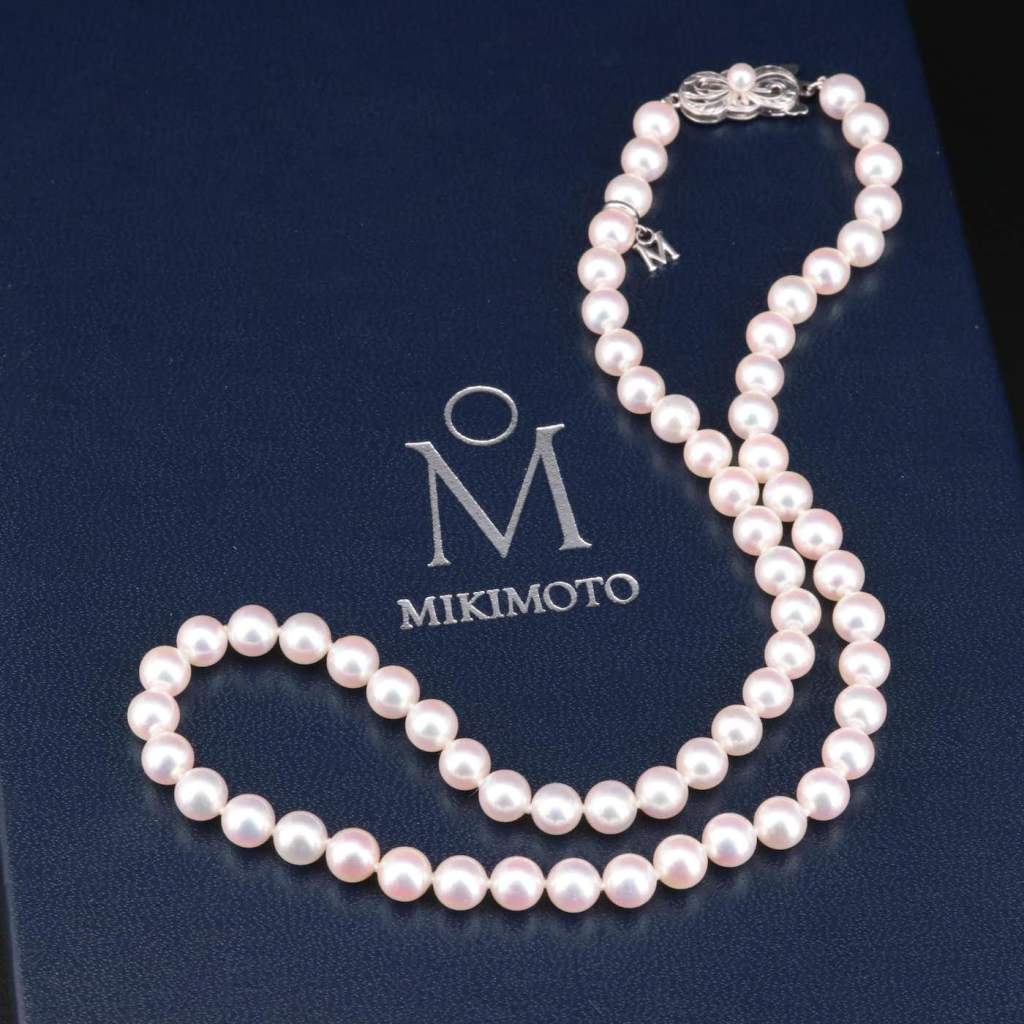
I have two specific memories attached to this era: Mikimoto pearls and the affair. I recall neither with condemnation but with compassion. One must have ample regard for the internal insecurities of an individual who pursues what my Mother pursued and empathy for the decisions she made, as driven by her continuing sense of inferiority. I was still in high-school and still living with my Mother when these events took place, and I certainly experienced them very differently from how my Mother assessed the situation at that time.
This was the very early 1990s, and Mikimoto pearls were all the rage in certain segments of American society. They were high-tech pearls, considered affordable by the affluent; essentially, high-end, cultured pearl jewelry. The pearl-inducing and harvesting technology Mikimoto invented allowed for hues of gorgeous, large pearls otherwise extremely rare to grow more expediently (at what discomfort to the oyster slave, I am not sure). The resulting pearl necklaces were undoubtedly gorgeous. What is now a $6000 necklace was $1200 in the early 1990s, and well over my Mother’s take-home earnings per month. The ladies at church were proudly wearing them, and my Mother became obsessed with owning one, too. In her mind, if she could own a Mikimoto pearl necklace, she could be on par with those megachurch society women.


 One More Perspective
Leave a reply to I Never Want to Put This Behind Us – One More Perspective Cancel reply