Continuing from Chapter VII Part 1, I want to once again emphasize how important it is to me to have written these chapters from the beginning and in order, otherwise context and the humanness of those I describe are lost to the reader.
….My Mother must have talked and thought for months about those Mikimoto pearls the women at her megachurch seemed to afford like popcorn; over time, she built it up as if owning one held the key to all of her dreams of fitting in, of being good enough.
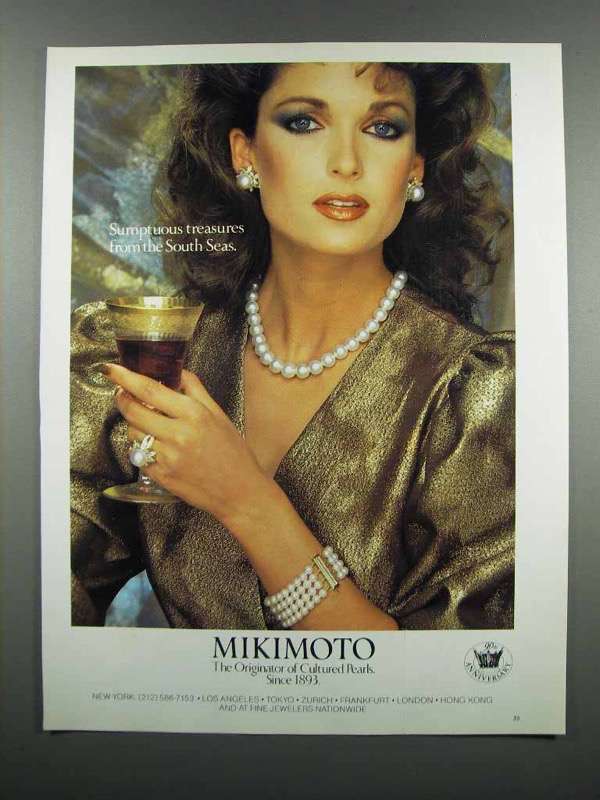
The sacrifices she went through to save for a Mikimoto necklace were not visible to me, but I knew our financial state. We lived in a two-bedroom apartment, the four of us, and the apartments had been built in 1960s Orlando. Dreary.

While I was in high-school and living with my Mother, my Sister slept in the living room. This was not unusual for a Hungarian flat, but it was for an American apartment. Little known fact about Florida is just how worn down everything becomes in its harsh weather. It takes significant investment to keep beautiful Florida buildings looking as picturesque as required to keep the tourist money flowing in. The entire Florida tourism however, is reliant on cheap labor.

We hardly ever ate out; if so, then it was a 25-cent taco place or a low-end restaurant. We ate nutritiously at home though, and spent zero funds on extras like soda or snacks (as it turns out, that was for the best).

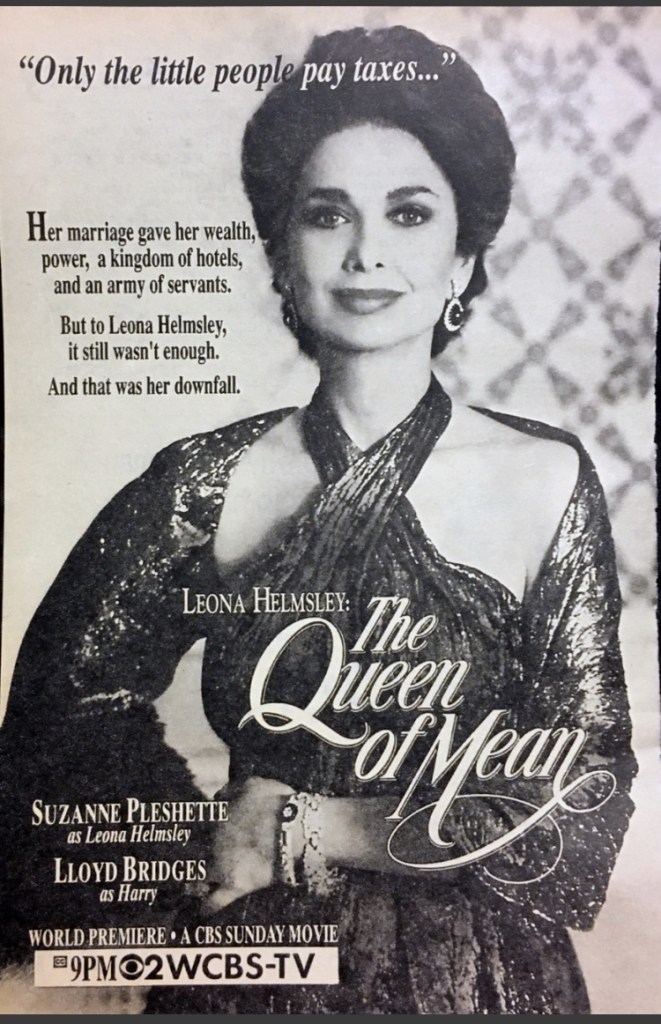
We made no trips, save the occasional drive to St Augustine for the day. I actually loved it when we went to St Augustine because that place seemed to be the sole environment in which my Mother came close to relaxing. She could soak up the old fort, the narrow streets, the beautiful water and for moments at a time, stop grasping, stop wishing for what wasn’t, to be who she wasn’t. Back to the sacrifices my Mother made to afford a Mikimoto pearl necklace….it was excruciating. By the time she could buy one, her ability to do signaled the end of the trend. Isn’t that how it works? Unfortunately, my Mother didn’t understand that. She thought it was a ticket to ride. She found it was the certification of the end of those women wearing their Mikimoto pearls. They were moving on, moving the bar. My Mother not only not learned how this game would go time and time again, she seemed to double-down on her desire and effort to be one of them. She longed dearly to be socially recognized as part of the women amply supported by a wealthy Husband, and like many movies of the past depict it (for example Leona Helmsley: The Queen of Mean), her desperation turned to blindness.
What came next isn’t a testimony of who my Mother is; rather, it’s a symptom of unprocessed feelings driving a person from deep within, far beyond her awareness, in no danger of self-reflection. It’s also important to realize my Mother was keeping up (and financing) quite the front for her Sister and other relatives in Hungary, all on a daycare worker and an audio-visual technician’s pay. She was buying her self-worth moment by moment, with serious detractors by her side, her Husband and I. Her Husband was unwilling to work more to improve their financial standing and cared nothing about what anyone else thought; he was eternally content in that way. His contentment infuriated my Mother. I was the unkind teenager who would take it upon myself to point out what was obvious to me, but deeply hurtful for my Mother: she’d never be one of the megachurch women she so coveted to be. I actually considered that a compliment and had no context to understand my Mother’s drive at the time. She and I saw the megachurch and its members, my Aunt and the other Hungarian Family members so differently; each time I spoke up, I was driving nails into her skull and marking myself for life.
There was another factor I did not fully understand at the time. My Mother was turning forty, and that was having a significant impact on how she saw herself and her prospects for her life.
My Mother and I experienced and endured very differently. We frequently shopped the store brand, white label, and dented-can foods; my Sister wore generic diapers, and a lot of our clothes came from Goodwill while I was in high school.

While I was the teenager with classmates in designer jeans and brand name t-shirts, it was my Mother who seemed deeply ashamed by our financial state and lack of social status. I didn’t see our standard of living as defining who we were, but, unbeknownst to me, my Mother’s insecurities and sense of inferiority was in the driver seat. Consequently, I didn’t go out of my way to edit out of my dialogue the indicators of living while poor, and I would often inadvertently embarrass my Mother while talking about our day at her megachurch. In the later years, far, far away from the dented cans and white-label products which enabled our immigrant Family to survive, she would quickly have a visceral reaction to any stories I attempted to tell from my high-school years. She would get very hurt and angry at the sound of my mentioning our modest living and with an intense face and choppy hand gestures she would tell me to stop talking about it, as if it was something egregious. What was a mark of great progress and the best opportunity for gratitude for me was a shameful secret to her. She didn’t even want me to talk about it to my Children. One even remembers her reaction wanting me to stop discussing the shameful secret of our poor years. Imagine the irony! …but I’m skipping ahead.
I knew very little of the Hungarian couple who lived in Windermere, FL, the richest suburb of Orlando in the late 20th century.

My Mother and her Husband seemed to spend time with them during a specific period in the early 1990s, but I got the impression it was my Mother who was the driver behind the association. She perceived them as rich, though on the Windermere scale, they were probably not. I was not with them when the two couples would get together, I would only hear the dialogue that followed, once my Mother and her Husband had returned home. I keenly do remember my closest interaction with that couple however. I was working a lot in my Junior and Senior years of high-school and needed a replacement for the rust-colored 1977 Chevrolet Vega coupe I had inherited from my Mother at age sixteen. She had bought it during her early Destin days in 1986 for $600. It was a good-enough car her Husband would often repair.

I was able to save $500 for my new-to-me car, but needed $500 more to make the purchase of a sexy 1984 Oldsmobile Cutlass Supreme, four-door. A youthful brown, a shade different from my Vega.
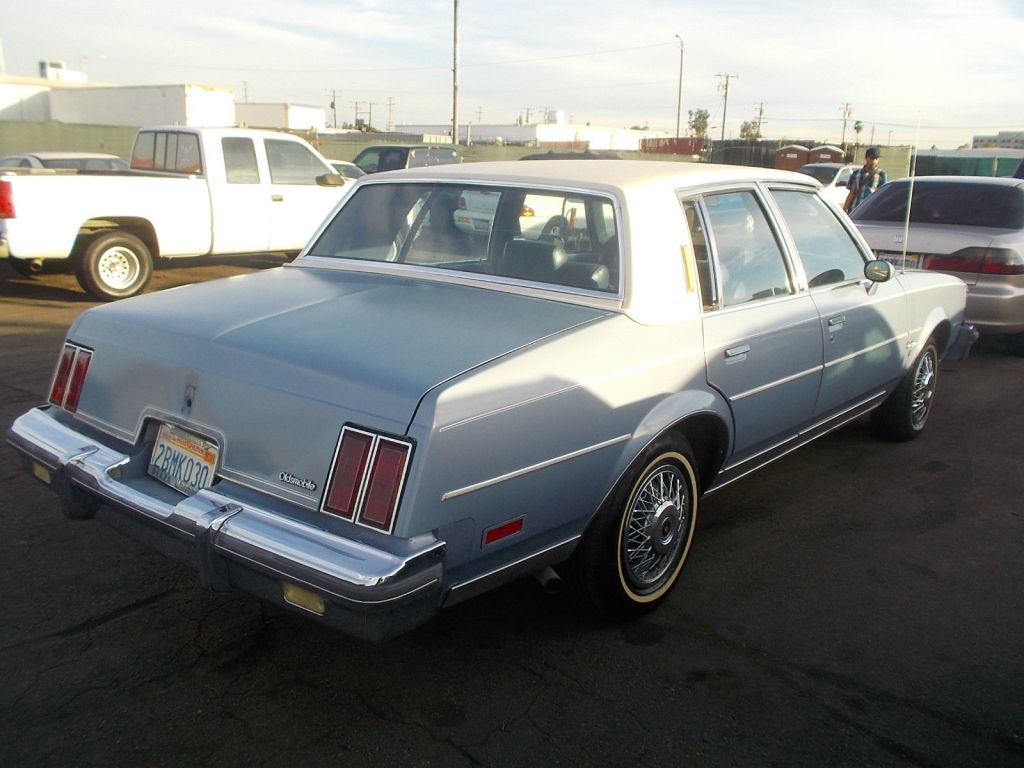
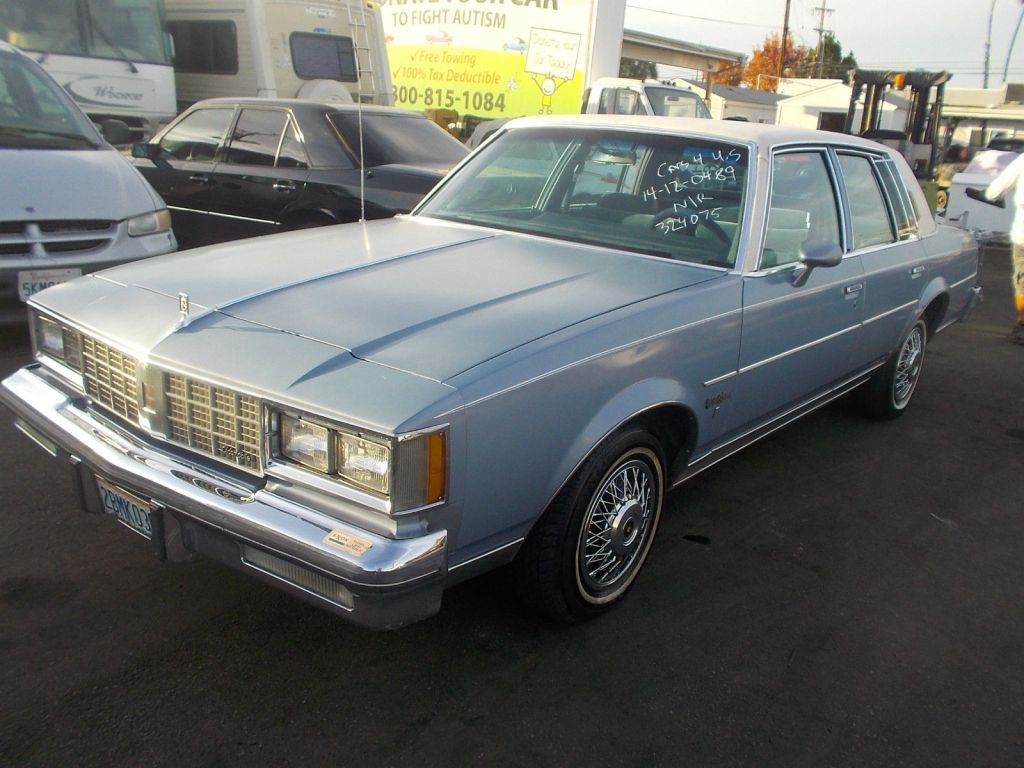
My Mother encouraged me to show my $500 and my Walt Disney World Cast Member (employee) badge to the Hungarian couple in Windermere and ask to borrow the remaining $500, which I did. They loaned it to me. It was all-around awkward, but what did it matter when I could buy this bloody boat and escape to anywhere!
The two couples somewhere along the way distilled down to my Mother and the other Husband striking up an affair. My Mother had little opportunity to see the man, mostly as my Sister, now five-ish, was always with her. This is where I came in. All of a sudden, my Mother, who had watched my every interaction with my Sister, now wanted me to babysit her. It was odd, and ultimately, she told me what she was up to so as to compel me to comply. Now, I was about seventeen, but I recall telling her I didn’t want to be part of her pursuit. I understood she was frustrated with my Sister’s Father and saw herself as working infinitely harder than he was, but I wanted no part of how she wanted to rely on me now, to facilitate her. I can only imagine how desperate, hopeful and delusional she was during this time, and I want to believe, for her sake, she was even a tiny bit happy, thinking a better provider was at last within her grasp. The third time would be the charm. I don’t know if she thought of the people she and that man were impacting, her Husband, his Wife (her Friend, right?), but I think the nature and gravity of this situation were congruent with the grip of inferiority, insecurity and scarcity from which my Mother unfortunately operated. Was it really her fault? She had no acknowledgments of her bruising childhood, no tools with which to recover from its impacts; and she flat refused to talk about any of it.
My Mother’s early 1990s affair ended exactly as most grown people anticipate. It soon came to light, and once push came to shove, the Wife reasserted her position and it was my Mother who was plainly embarrassed. Both couples returned to their normal lives, left to pick up the pieces the best they could. A predictable outcome, isn’t it? The cost to my Mother’s second marriage was significant. Her Husband, a usually easygoing individual, was bitter. He once expressed his feelings about my Mother and the situation directly to me, and I pounced on him in my hallmark manner: “You stayed with her. If you’re going to stay, you can’t talk about it. You can’t do both!” How they survived this, if they truly survived this, we would see in the coming years, but I was coming to a close on my childhood with my Mother, and it was not pretty for us. I delivered my last car-loan payment to the Hungarian couple after the blow-up, up it was personally imperative to me to do so. It was part of my identity separate from my Mother, I believed.
My relationship with my Mother had devolved to a power-struggle around whose reality was to become the reigning narrative about my childhood years in Hungary: mine or hers. We would frequently spar, and all I accomplished with seeking acknowledgment from her about her six-year absence was to cement myself as an angry bully in her eyes, forever to remain as such.
As I write this, I want to be abundantly clear I do feel for her. She didn’t know she would be signing up for a Daughter who simply couldn’t be sewn up for too long; her Daughter is the last person from whom my Mother anticipated perpetual challenges. As my Senior year of high-school was unfolding, I saw my escape take shape. I felt no obligation, no loyalty to the life my Mother was leading, to her, to her yearnings, her perceptions, her pursuits. I didn’t see her as trying to cultivate any connections with me, nor was she encouraging of my relationship with my Sister. We were all ready for me to go (except my Sister; she was the sweetest, most compliant, innocent tiny girl). Naively, I believed once I physically separated myself from my Mother, I would be free to assume a new identity….I would be wiped clean of anything that transpired through my age eighteen, prior to my life going on record.
After I moved out, months before beginning college on a scholarship, my Mother’s life was instantly simpler. I am glad I was able to get out of their way; especially, I was glad my Sister would now have a room of her own. It seemed to me however, my Mother was stepping up her subsidy of her Sister, bringing her to the US for months at a time, feeding and entertaining her every step of the way. Each visit, my Mother would send her Sister back to Hungary with my Mother’s best clothes. Twins, though fraternal, they were similar in size most years. My Aunt had a way about her… a psychological method to which my Mother fell glad prey over and over. My Aunt could take my Mother for her best of everything, but still make it seem like she was doing my Mother a favor. This was a relationship I could never understand. If my Mother had any resentments toward her Sister, I swooped right in to conveniently divert the target from my Aunt onto myself by voicing my opinion, like a decoy torpedo shot out of a submarine. I was fantastic at playing that role. In my head, I would be convinced I was seeing an injustice, my Mother as the innocent, generous Sister, whose entrusted Twin was taking advantage of her. In reality, I would step right into the bad-guy role of the rescuer-victim-perpetrator triangle by imploring my Mother to please keep her hard-earned money to herself. The older I got, the more clearly I understood which of the two Sisters had more inherent financial security, and it wasn’t my Mother. My Aunt, living in Hungary, had the safety net of social medicine and national pension; my Mother was living paycheck to paycheck, woefully underestimating what not having retirement savings in the United States would eventually mean to her.
I ran from my Mother even before I graduated high school. I actually moved out while still a Senior, but formally took my belongings that fit in the $1000 car I bought, after graduation. After the summer between high-school and college, I would see my Mother less and less. I had an academic scholarship, a government grant and student loans, and I was appreciative my Mother was willing to buy me a meal plan. It was that contribution that kept me thinking maybe there could be hope for our Mother-Daughter relationship, and with each life experience, with each year, I naively thought I could better approach her, more constructively, more wisely.
When I was planning a wedding at age nineteen, she jumped in and helped secure her megachurch, she paid $400 for the silk flowers which thereafter lived a long life in her home; she did the things one would hope for from a Mother. It was deceivingly nice for moments here and there. She seemed to like who would become my Husband, and when we announced we were moving from Florida to Oklahoma one month after the wedding, she even seemed sad.
My Mother made the long trip from Orlando to Oklahoma City to see me graduate from college. I didn’t give her effort to attend enough on-the-spot recognition at the time, and I should have. I was twenty-one by then, married two years with my own household, and felt my days of childhood were far behind me. I was yet unaware of how powerful one’s childhood experiences are, how impactful those first attachments are, how skewed my definition of love and respect were. I did not understand the psychology of how an unexamined self re-chooses the brand of love experienced in childhood, so I was dumbfounded as my life and marriage were unfolding, how I would arrive right back in the deepest hurts attributable to my experiences of my Mother. …and none of it occurred without my part in it.
After my college graduation, I became an Air Force Officer and still saw my Mother and her Family seldom enough to make the visits reasonable. Four years after getting married and moving away, My Husband and I were expecting a child and had an opportunity to move back to central Florida. At age twenty-three and with the start of a professional life under my belt, I was back in closer proximity to my Mother again. I felt positively prepared to handle it all brilliantly. My Sister was twelve when my Son was born. In my perspective, she had grown up in an artificial bubble of the megachurch, methodically kept unaware of the realities of her Parents and Grandparents. She was sweet and compliant, the perfect Daughter for my Mother, at last! It’s important I emphasize it was my Mother who carefully curated my Sister’s world, and I do believe it was out of love. The best way my Mother knew to love my Sister was to groom her to fit into the megachurch world and to thrive in it in her own right, set apart from our humble, immigrant narrative. My Mother went to great sacrifices financially to ensure my Sister had everything she needed to become an Orlando megachurch Wife, conceptually speaking. The opportunity for landing a wealthy Husband and playing the at-home support role was the best life my Mother could imagine to give my Sister, as it was the best life she was always grasping for herself. A hardworking, capable woman, continually seeking her fortune through a man. The polar opposite of the raising my Father afforded me. ….oh, what a rub.
My Husband and I settled about an hour from my Mother and saw her reasonably frequently as we were readying for the birth of her Grandchild. I think my Mother and I both believed this would be a new chapter for us, more aligned, as I would be at home with my Son for a while, working only part-time. She began relating to me in ways as if I was now part of some dependent-woman rank-and-file and to my Husband as the breadwinner whose ego had to be constantly stroked. It was nauseating.
The day I went into labor, my Mother drove to be with me. When my contractions became stronger, she said she had to leave because she couldn’t watch me be in pain. I thought this was odd, but I didn’t feel unsupported. I was a bit busy. To her credit, she came back the following morning to meet her first Grandchild and bring a birth day cake for him. He ate it via my milk a while later; we joked about that. It was nice.
The next year was a blur as I navigated my new role as a Mom, the idiosyncrasies of my marriage in this new phase, and my own value system around Motherhood and equity in marriage. My Mother tried her best to be helpful to us but was also tending to the challenges of her own life. She was forty-seven now and still chafing at the megachurch. With each passing year, she was pinning more and more of her own hopes for life onto my Sister. Some of that spilled onto me, as my Mother played up my Husband’s importance despite my lived experience of him, now as a Father.
My Mother’s way of relating to my Husband felt discrediting to me. She was artificially boosting his role, despite his lack of time and effort investment in our Son. By the end of the first year of his life, he became my Son. I could not bring myself to say ‘our’ because I wasn’t feeling it. My Mother didn’t ask how I was doing, how we were doing; she simply stuck to the script in her own head. The more she praised my husband, the angrier I got. She was, I believe unbeknownst to her, working directly against me. She was giving him recognition for his biological contribution, brushing right over his actual conduct and demonstrated priorities now that the child was born.
It took me many years before I understood what was unfolding. As far as my Mother was concerned, I had arrived at my life; she could proudly speak of her Daughter, Son-in-law and Grandson. We were educated and self-sufficient; we looked good on paper and in narratives. ….and I had to screw it up by opening my mouth. What wasn’t visible about my Husband and my marriage to my Mother was a lot, but she wasn’t asking questions, and I was not really telling. My Mother didn’t realize my Husband spent as much or more than we earned, was financially impulsive, and had zero capacity for being present or for contentment. His mind was forever set to “consume,” and he was always plotting grand things. Grand things to do and grand things to own. I never told my Mother we once had our electricity turned off when my Son was about two months old. We ate at restaurants incessantly but couldn’t pay our bills on time. I never told her I found naked pictures of other women on our home computer he said he was using for research for a piece he was authoring, and I didn’t tell her he never worked as many hours as he did after my Son was born. It was a coincidence I wasn’t buying. My Husband, an engineer and an Air Force Officer, had chosen discontentment as his career, and he was now dragging not just me, but two of us with him. To minimize his impact, I offered for him to separate from the Air Force, be an at-home Dad, pursue his many hobbies he wanted to turn into a money-making enterprise and I would return to work full-time. Not only did I get the job very quickly, I up and moved away from Central Florida back to Oklahoma. As he had a few months of obligations to the Air Force left, my Husband stayed behind. The next few months, he and I both experienced tremendous freedom from our time apart. I managed the money, my job, and operated as a solo Parent, and he still found a way to buy a motorcycle and live as if he was twenty-two and single. Four months into the arrangement, I recommend to my Husband he not separate from the Air Force and for us to keep working on our separate ways. One kind Colleague couldn’t believe my Husband’s answer to me telling my Husband to keep on living his single life was to keep on living his single life. My Colleague said he would have been on the next flight to be by his Wife’s side. I said “Yes, but it sure confirms I was correct in my offer, doesn’t it?”Was I a bit hasty in seeking my separate ways from my Husband? Possibly. Only time would tell.
I was too busy to think about what my Mother and my Husband, soon-to-be divorced Husband, would do with their time only one hour from one-another, but I was about to learn. Let’s see. If a Daughter has a difficult personal life, what should her loving Mother do? Oooh, oooh, if you raised your hand and said “bond with her soon-to-be former Son-in-law, declare her Daughter a difficult, angry beast and condemn her for all things since the dinosaurs”, then you’ve guessed it! This was in 2000, and even though my Mother did eventually come to Oklahoma one time in 2001 and another time in 2003, for the next seven years, I hardly saw her. My life was changing quickly in those years, and every time a major life event occurred, I thought I was better equipped to relate to my Mother, but I was gravely fooling myself.

 One More Perspective
Leave a comment