Following the instances I pass judgment and get on my high horse, the door of humility eventually hits me on my way out. These are just a handful of stories to illustrate some of my humbling realizations.
My Sophomore year in college, I had an Engineering Calculus Professor who came to every class from August to December in the same clothes. I was generous enough to assume the clothes simply appeared to be the same. Nonetheless, I began looking for the minor differences in the shade or subtle pattern in his stone-washed jeans, denim button-down shirt with a white crew-neck t-shirt and tan hiking boots. I rarely detected the differences from class to class, however. I thought he must be the eccentric Professor one often hears makes life difficult for students. He really did not. He was fine, but I still concluded he was odd for wearing the same clothes for at least the full semester for which I could personally vouch. Fast-forward thirty years. After knowing it as old people’s clothes in Hungary, I rediscovered the utility and simplicity of merino wool. My Grandmother had worn it all of her life, I could recall, and as an adult, I did grow to prefer wool for my suits. In the last year, however, I have became acquainted with a full wardrobe’s worth of merino wool clothing from undergarments to slacks and turtlenecks. What pure joy and incredible function! It took me a while to realize I was now overwhelmingly preferring my wool clothes, even when jogging around our neighborhood. The kicker? The merino wool clothing I have accumulated pretty much looks the same if I am truly objective about it. Ha! In fact, I have wondered if I look to my Colleagues, especially on video calls, as if I wear the same clothes most every day. Dr Calculus Professor, I apologize to you! Denim on!
In college, I was encumbered by a slew of childhood messages around not putting myself in obviously risky situations; this was in part due to my Father’s efforts to inoculate me against peer pressure, and also out of his own disdain for any hint of groupthink (especially, in then-communist Hungary). Mostly good, partly odd, but over the years it did save me from some of the most likely young-people drama. One place I was (at that time) inexplicably drawn was the company of LGBTQ individuals. In college, I made it a point to check out a gay nightclub or two; there, I got a glimpse of what it was like for those not similarly encumbered as I was, freely enjoying their authenticity and energy. I never felt this in the company of straight people, and I avoided most social situations with my peers. I was full of “how I should be” every moment of every day, and it looked unfathomably liberating to be as these LGBTQ individuals at their safe place were. I had no way to grasp at this stage of my life just how well hidden, even from myself, I truly was. In a handful of years following college, I would, from time to time, hear about same-sex couples raising children, and it confused me. I didn’t understand why those who had established themselves outside the most constraining social norms would deliberately seek to take on such responsibilities. It never occurred to me those gay and lesbian couples on the parental journey were looking to love and define themselves in child-raising constructs, just like straight couples. I was so puzzled by this; in fact, I would now call it a judgment. Of course, my judgment said more about me than anyone else, but I didn’t understand that at the time (and still forget at times, even now). Several years later, there were two Moms in one of our private schools in Oklahoma City, and I was probably curious about them, but I chose to stay away, as if I was one of those disapproving Moms giving them wide berth. What a missed opportunity, that was, and I am sorry I wasn’t inclusive instead. Fast-forward some years, and I was now married to my Wife, raising teenagers together. I was given a rare opportunity to be a Mom in both a straight and a same-sex marriage, in series, of course, but what a tremendous insight that gave me. It is with this authority I get to say one’s sexual orientation has nothing whatsoever to do with the yearning to be part of a Family, and to construct a Famil, which can include children when desired. Wanting to raise children with someone you love is a fundamental, human quest, and wholly independent of the biological mechanism of it all. What a gift I received, through my life’s journey, to get to know, to deeply feel the difference between parental commitment and biological entitlement. I am not insinuating all heterosexual Parents rely on biology first and foremost as their defining element when it comes to their children, but I do want to highlight the genuine love and commitment it takes to step into and choose a parenting role when biology is not involved. Specifically, to be clear, to have no biological connection but be nonetheless fully vested in what a child needs to be a safe, secure and thriving, is a selfless love worthy of at least the level of recognition granted automatically to biologically related individuals. Can both biologically and non-biologically related Parents and Grandparents twist the love of a child toward their own fulfillment, their own validation, and to boost their own identity? Most certainly. Therefore, I have demonstrated to myself the love, blood, sweat, and tears it takes to nurture a child, to create home and belonging, to provide acceptance, growth and teach self-sustainability for the child’s best interests, requires no biology, no preset gender, merely the genuine desire to give unconditional, nurturing love.
When my children were in their single-digit ages, I was myself a lot younger, and I had very little understanding of the price of extraordinary intellect, talent, and fame. I had full confidence in my brilliant children, though, and I imagined all kinds of ways they would self-actualize and contribute to the world. I did not have specifics, actually; I was not prescriptive with the kids beyond telling them at every turn; I merely reinforced the idea they had to get an education for their own sustainability. My themes were two-fold: education and independence. “You need education so you can make choices toward your own independence!” I would often say throughout my Children’s childhood, with increasing complexity congruent with their age and developmental level. I had faith that as long as they had the concept of studying and pursuing a profession they liked, it would naturally turn out well for them. At young ages, when it was customary for my children to see the fairy tale heroes walk off into the sunset and hear the narrator end with “….and they lived happily ever after,” I’d follow up with a question of my own each time: “Where are they going?” Even before they knew the word, I had taught them to answer back: “They’re going to college!” Around this same time, I would meet parents a decade or further ahead of me on the parental journey, and they would be counting their blessings no one was pregnant nor jailed in high school, on their watch. I would be appalled. How could they have such a low bar for their child? Was this truly all they envisioned for their offspring? All I needed was time and the natural mess of real life to keep unfolding for me, and eventually, I understood these Parents’ perspectives wholeheartedly. It wasn’t that their Children (or mine) were not doing their best; it’s that there are simply too many variables, which I couldn’t see until parenting of the teen age was unfolding for me. I would proudly share my previous judgments and laugh at myself. I had eventually grown up alongside my Children and learned Children are amazing individuals with pursuits that are not always in line with the talents their Parents most readily see in them. Eventually, I welcomed my report card, too; no one was pregnant, and no one went to jail.
I grew up heavily influenced by what my Father thought was beautiful…whether an overlook from a beautiful mountain, Manhattan’s skyscrapers or the cut of a well-tailored wool suit on a shapely woman; I largely came to appreciate why he fancied the things he pointed out, why he sensitized me to some of the fine details of life, as he did. Paradoxically to many of my beliefs around women’s empowerment, I love the sharpness, the crisp determination of a well-designed, closed-toe, high-heeled business pair of pumps.
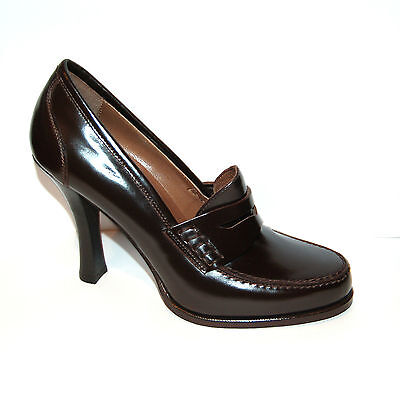
I have owned dozens and worn them well in the last thirty years; even in a military uniform. When we moved from Oklahoma to Washington DC, I was a stubborn (read: foolish) holdout on pairing my suits with tennis shoes for the Metro ride, despite my fifty-pound shoulder bag carrying everything from my laptop to water bottles and the plans for world peace. I simply refused the DC commuter attire and switched to a rolling briefcase well before finally caving regarding the shoes. Worse, I held a secret judgment I kept to myself; I covertly noticed older-than-me women’s lack of heels. Really, not even the lack of elevation per se, but the depressing frumpiness of the flats they seemed to gravitate to. It’s not enough they cut their hair to pretty much match pick-your-favorite Golden Girl, but they also subscribed to the school of shuffle shoes. “Not me!” I would say. Gulp! True to form, I eventually graduated to understanding precisely why so many went by the fate of the flat frump. Two things: years of cramming toes and altering weight-bearing to 30% of the available foot anatomy takes its toll, Young(er) Me!, and as we pass the age of forty, the ball of women’s foot actually loses its padding. If a woman doesn’t heed the early warning signs of her crying feet, she can permanently damage sensitive bones and ligaments in her feet. Ask me how I now know this. Ouch. Oh, and the hair? Menopause is not for sissies. Hair-loss is the insult to injury. Shorter styles are a practical response to hair loss we didn’t ask for while we nurse our arthritic toes in the padded-footbed of our they’re-not-so-ugly shoes.
Passing judgment has not worked out for me. Though I am deeply grateful for the entirety of my life, eating the proverbial crow simply isn’t my favorite, but has been a necessary part of my own growth. Over the years, I continue to hone the fine art of picking my battles on all fronts; not because life has worn me down, nor because I have lowered my standards for myself, but because becoming aware and compassionate toward others and myself has taken the place of my more clinical perspectives.

 One More Perspective
Leave a comment